
Habitat Improvement
Now that we are starting to find evidence for salmon returning and successfully breeding, we need to ensure that as numbers increase there is enough suitable habitat present for salmon to thrive in the Don Catchment. Salmon prefer to make their redds (fish nest) in fast flowing riffles and glides (where pools lead into a riffle) with a gravel size of around 20-60+ mm, whereas trout favour smaller gravel sizes 10-40 mm towards the end of a pool. Redds require a constant supply of cold, well oxygenated water for their eggs to develop and hatch successfully. This means the gravels need to be clean of sediment, which often finds it’s way into rivers through poor land management.
Once the eggs hatch as fry, to avoid being predated, schools of fish use in-channel vegetation such as roots, tree branches, reeds and other aquatic plants to hide in, acting as nurseries. If there is a lack of in-stream vegetation fish become vulnerable to predatory fish and birds, and so fish populations suffer. Naturally, there would be an abundance of this instream habitat but due to our desire to keep rivers ‘tidy’ fallen trees are often removed, even if they don’t pose a particularly significant flood risk.
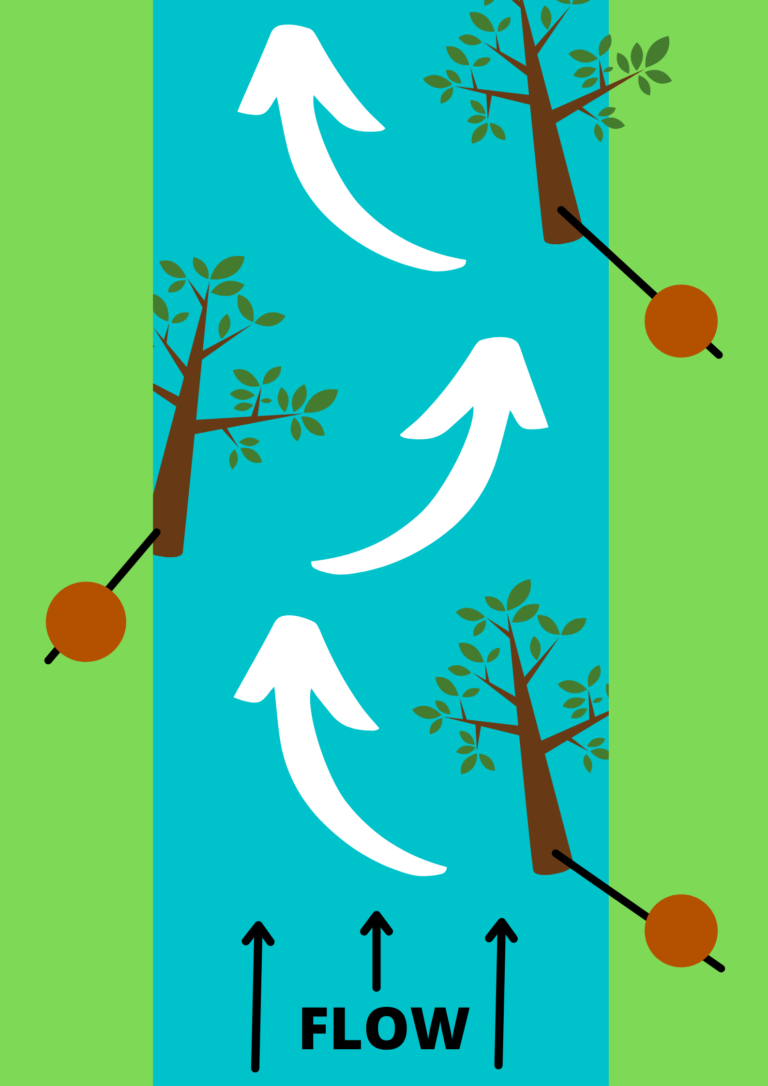
We can recreate this natural process by securing felled bankside trees to their stumps and root systems, known as large woody debris (LWD).
There are multiple benefits to having woody debris in the river environment, here’s a few:

Can help meander straightened rivers when used on alternative sides
- An important aspect of a heathy river

As water hits the debris it slows the flow
- Easier for fish to move upstream
- Gravels drop onto bed – provides place to spawn

Provides a ‘home’ for fish
- A place for them to hide from predators such as heron or kingfisher giving them a fair chance to escape – balancing predator-prey relationships.
- When the river floods – provide somewhere to hide during so they don’t get washed downstream.

Traps organic materials (leaves, twigs)
- And biofilm (algae and bacteria) forms on logs which both provide food for insects that other invertebrates.

'Cleans’ rivers
- In over-widened or slow rivers it speeds up flow to clean gravels, meaning more oxygen will flow over redds containing fish eggs, resulting in greater hatching success.
- Captures fine bits of dirt in water and deposits behind debris meaning water is clearer.

Sorts out gravels into different sizes
- Different plants and animals like different sizes to live in.
- e.g. burrowing mayflies like sand substrate to live in whereas flat-headed mayflies prefer flat stones with fast flowing water.
- The more diverse a river is the more different plants and animals will live there and the healthier it will be.

Regulates temperature of water
- Provides shade
- Traps seeds or propagules for plants to grow = keeping rivers cool

Invisible changes
- Mechanical mixing of water provides more oxygen, helping species that need high oxygen levels survive.
- Breaks down pollution quicker.

Reduces bank erosion
- Footpaths/urban areas.
Somersall Park – Case study
The River Hipper rises at the Hipper Sick on Beeley Moor, a wetland part of the Chatsworth Estate in the Peak District National Park. It’s a typical small, rain-fed Derbyshire stream which passes through Holymoorside village before it skirts the south side of Chesterfield town centre and confluences with the River Rother.
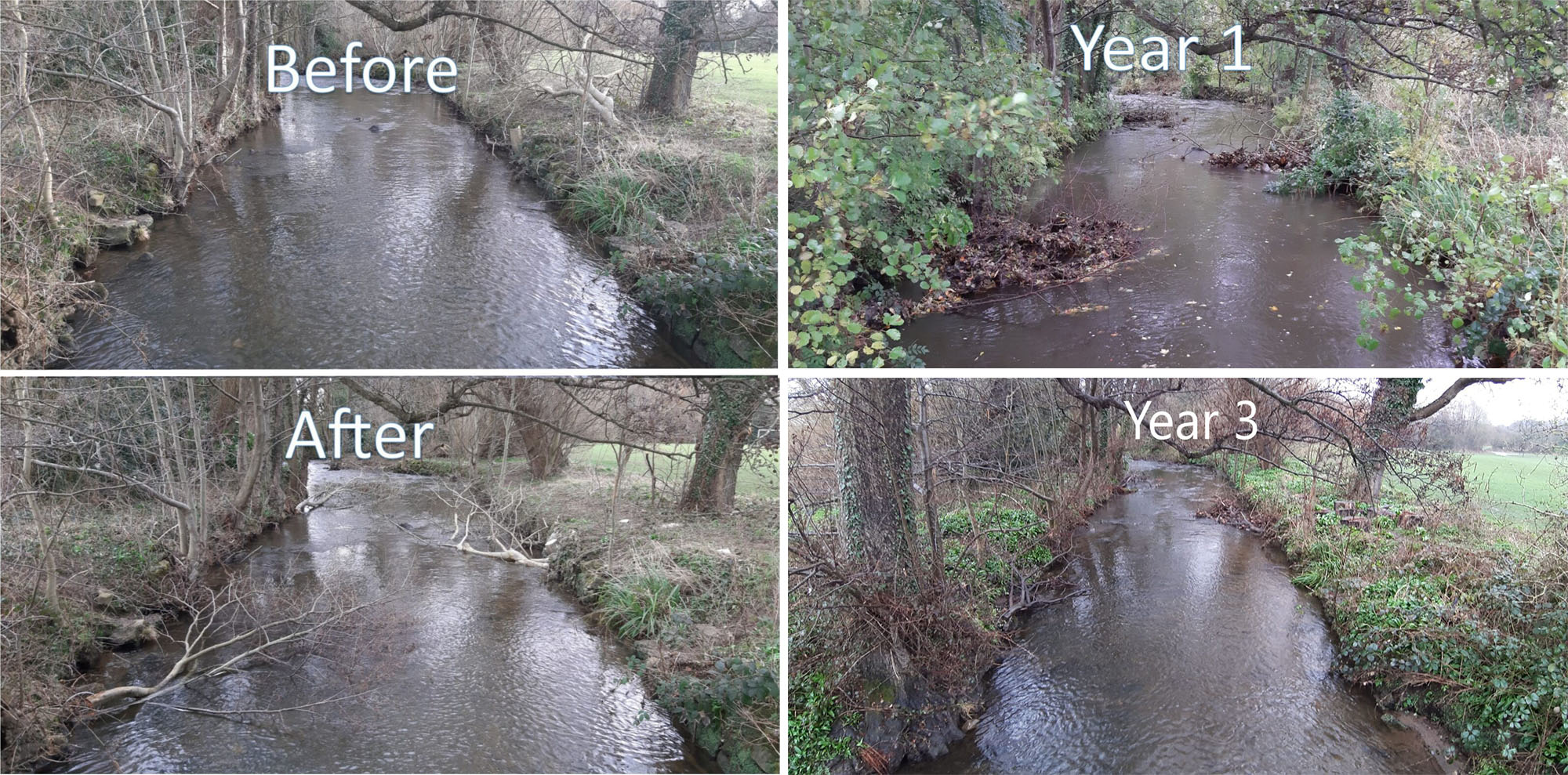
As this stream runs through Somersall Park, it has a semi-natural feel despite historically being heavily modified. Parts have been straightened due to changes in land use, impoundments are still present in the form of weirs left over from the river’s industrial past, and banks have been fixed in place using stonework. In combination these human modifications don’t allow for many of the natural river processes that would otherwise occur. In addition, the practise of removing windblown or dead and diseased trees from public parks limits the ability of the channel to form structurally-diverse habitats.
By introducing large woody debris into the channel, we have been able to create in-channel meanders by placing them on alternate sides of the straightened sections.
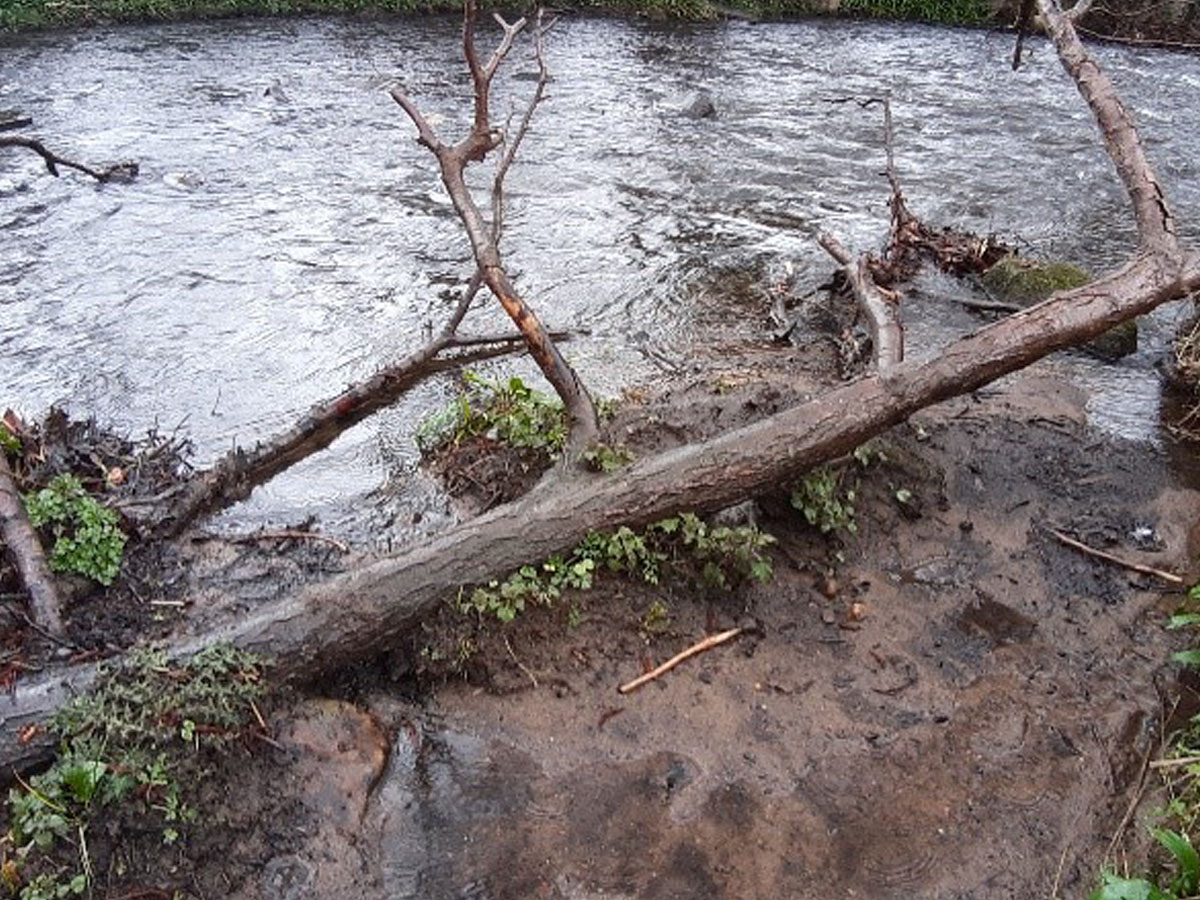
This photo taken in Spring 2023 shows that LWD are changeable structures and after a number of years may need maintenance or can reduce in structure. However, they also becomes less prominent as they are buried by deposited silts. This in time builds up the bank, allowing marginal and bank vegetation to establish, helping to hold the bank together and preventing/reducing erosion. Once established, the bank will continue to provide in-stream flow diversity which may have been lacking in a straightened reach prior to intervention.