
Salmon Recorder
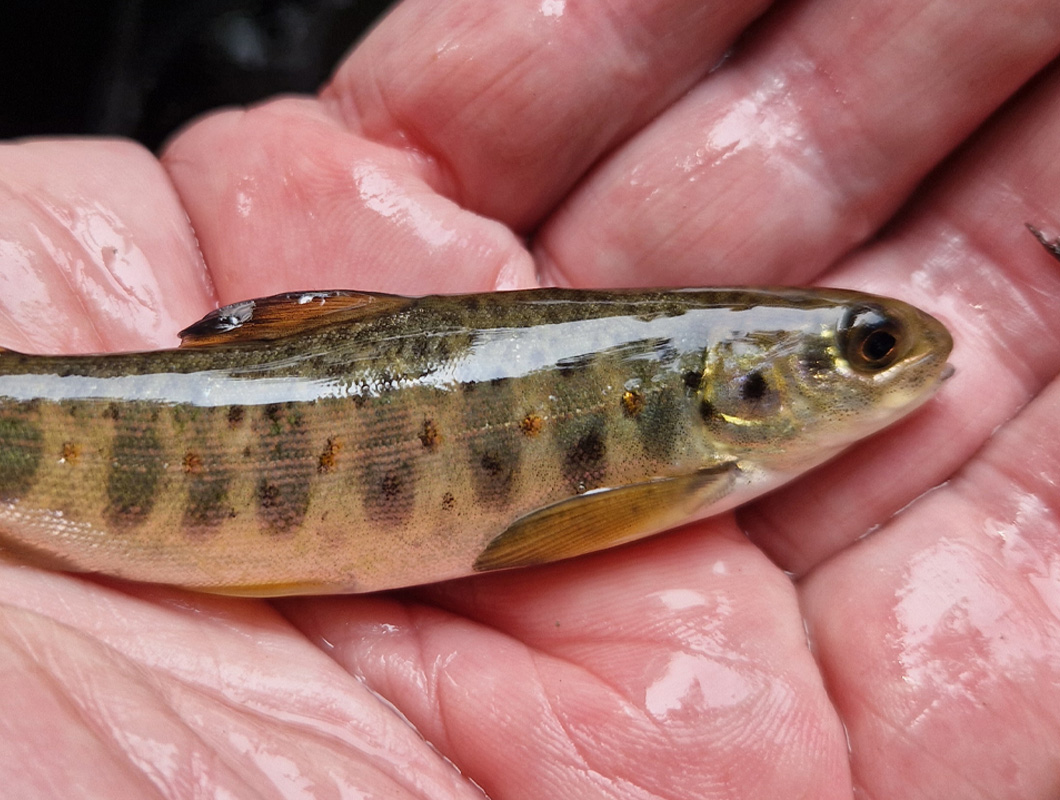
Since the first fish pass was put on the River Don at Crimpsall Sluice back in 2000, DCRT has hoped for the return of the Atlantic salmon (Salmo salar). Over the years, we have constructed six fish passes on weirs in the Don Catchment, and have removed others completely, helping to create a salmon superhighway.
In early 2019 a Salmon was found on the River Don at spawning grounds in Sheffield, the first spotted there in over 150 years. Since, there have been many more sightings and in 2025, the first wild born Salmon parr in over 200 years was found in the River Don!
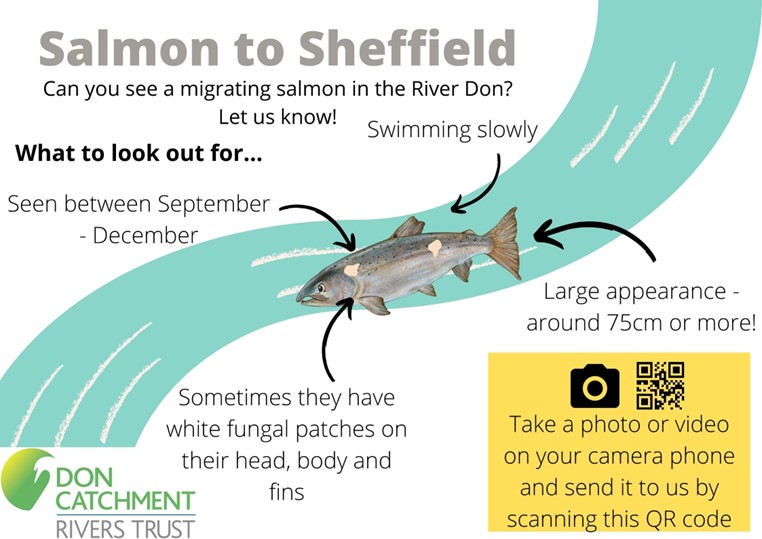
Where might I see a salmon?
Salmon might be spotted swimming in the water, attempting to jump weirs or creating spawning habitats, known as redds (see our video at the bottom of the page to learn about redds). As many salmon die after their long journey from the sea, you may spot a dead salmon on the riverbank. Anglers may also catch salmon when fishing along the Don. Scroll further down the page for help identifying Atlantic Salmon.
We understand that fish can be caught by accident during the closed season so if you do catch a salmon out of season, please let us know as it can still help us monitor the salmon population. However, we do not encourage people to go out and purposely fish for salmon during the closed season (please see you local fishing byelaws for more information).
When can I see a salmon?
You may see salmon in the river at any time of year as young salmon can spend up to three years in the river. However, as barriers to salmon migration have reduced, you may also see adults migrating upstream in the Autumn. Look for calmer sections of the river where salmon may be resting. Good vantage points are bridges or elevated walkways. Let us know if you spot any!
Tell us about your salmon sightings
To help record the return of Salmon, we have set up the Salmon Recorder online form. When reporting a sighting you will need to include your name, contact information, a photograph of the Salmon, the date of the sighting and an 8-figure grid reference. However, we hope to gather as much information as possible so please tell us any additional information you can provide.
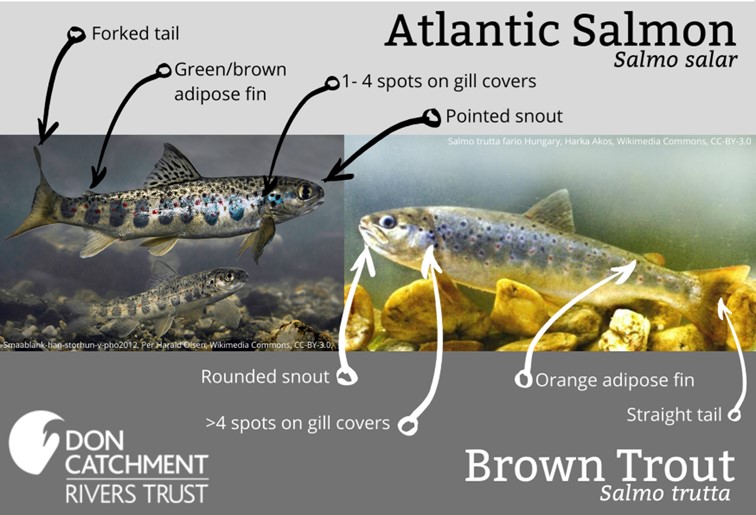
How to identify Atlantic Salmon
Salmon and trout parr look very similar.
Here is how to tell the difference…
Identifying salmon spawning habitat (Redds)
Salmon creating spawning habitats, known as redds.
Watch the below video from our Fishery Habitat Officer Matt Duffy to learn how to identify these.
Interesting salmon facts
- Atlantic salmon can smell one drop of scent in an area the equivalent size of ten Olympic swimming pools!
- Salmon are culturally significant around the world.
- A prominent Celtic Irish myth is ‘the salmon of knowledge,’ which swam in the Well of Segais eating magical hazel nuts that had fallen into the water. There was a prophecy that Finegas would catch and eat it, thereby gaining all known knowledge. The apprentice of Finegas (a legendary poet and sage) Fionn, cooked the salmon of knowledge but burnt his thumb. He then sucked his thumb and gained the salmon’s power. From that point, if Fionn wanted to gain knowledge from the future, he only had to chew his thumb and all would be revealed!
- The Irish hero Cúchulainn would use a ‘salmon leap’ to subdue his enemies in battle.
- Loki, the trickster god of Norse mythology transformed himself into a salmon and leapt into a pool to avoid the wrath of the gods but was caught by Thor. The tapering of a salmon’s body at the rear of the fish is said to be the result of Thor’s grip.
- The salmon appears in much of the artwork of the Native Americans of the Pacific Northwest of America, where they were a food staple and culturally significant. In Sahaptin, the word for salmon used in sacred ceremonies is “wy-kan-ush.” Also in Sahaptin, the word “pum” means “people.” The tribal cultures in the Columbia River Basin could rightly be called Wy-Kan-Ush-Pum or “Salmon People” for how completely these sacred fish shaped their culture, diets, societies, and religions. © Columbia River Inter-Tribal Fish Commission