We’ve been exploring things we can do in our gardens to help reduce flood risk in our weekly newsletter feature “NFM in the Garden”. Our volunteer, Barry Caldwell, has been in touch with a fantastic example from his garden using permeable, rather than standard paving, that allows rainwater to soak into the ground instead of rushing over the surface into struggling drains or directly into the river:
With both of our children living at home and now driving, we have had to face the inevitable decision to enlarge the parking area in our garden but we wanted a green solution that would allow us to slow the flow and do our bit for Sustainable Urban Drainage (SuDS) and wildlife! Inspired by a visit to the RSPB visitor centre at Spurn Head on the East Coast last summer, where the parking area was a permeable paving system and gabion boxes were used as a retaining wall, my wife and I decided to recreate a smaller version at home.

The recycled plastic EcoGrid is placed on aggregate & soil
We used a good quality product recycled from plastic and a quality grass and small leafed clover mix, that if left to grow a little in the summer, would attract bees.

The EcoGrid is filled with the soil & seed mix
Using a permeable paving system also meets planning regulations as permission is required when the area to be paved is more than five square metres! Dealing with runoff at source rather than allowing it to runoff quickly into the River Rother is a little contribution to reducing peak flows and therefore, flood risk. The gabion boxes were filled with some old concrete we had stored and we have ivy growing along them to hopefully attract lots of bugs.

Gabion boxes filled with concrete
We are pleased with our hard work and it’s good to know that we are not increasing flood risk in places further north, such as Fishlake, so badly hit last Autumn.
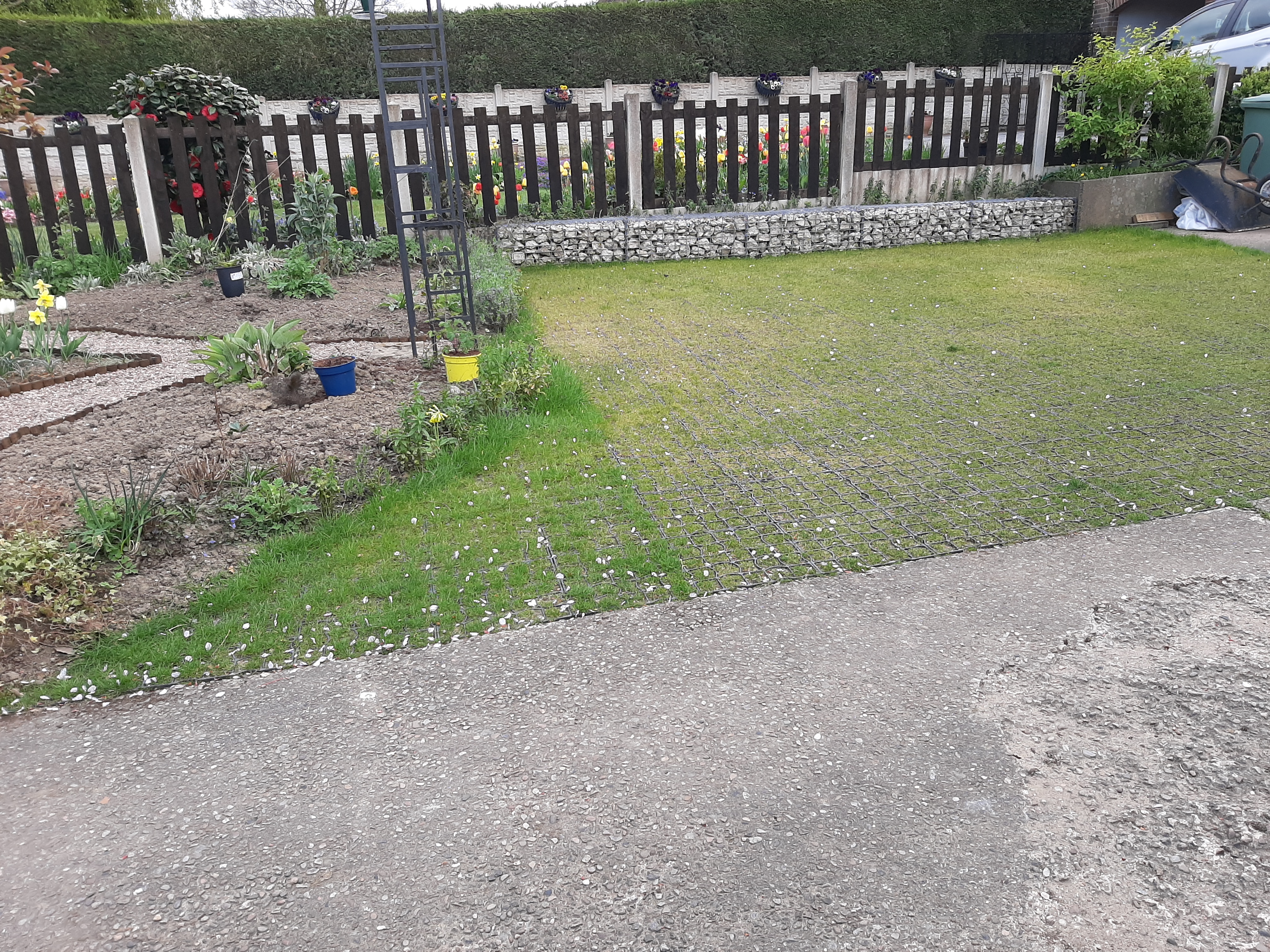
The finished product!
Further guidance on a range of ways to make your paving permeable is available from the RHS here.