…Well, very nearly! The vast majority of the earth works at Grassmoor Country Park as part of our flood alleviation and habitat enhancement scheme were finished off this month. This project has been quite a challenge navigating various obstacles along the way, such as the 27 mineshafts (!) the park was built on, so we are thrilled to see it all come to fruition and the newly created features already doing their thing and holding back water! All the water that drains from the park flows into the Calow Brook and the Spital Brook which then joins the Rother in central Chesterfield. Slowing the flow of water into the brooks can help to reduce the pressure on the river network during heavy rainfall. The scheme also reintroduces vital wetland habitats, one of our most threatened, back into the landscape. We hope the project will act as a springboard for further schemes in the area that will help tackle flood risk and boost biodiversity. Read on for a more detailed look at what the project entails.
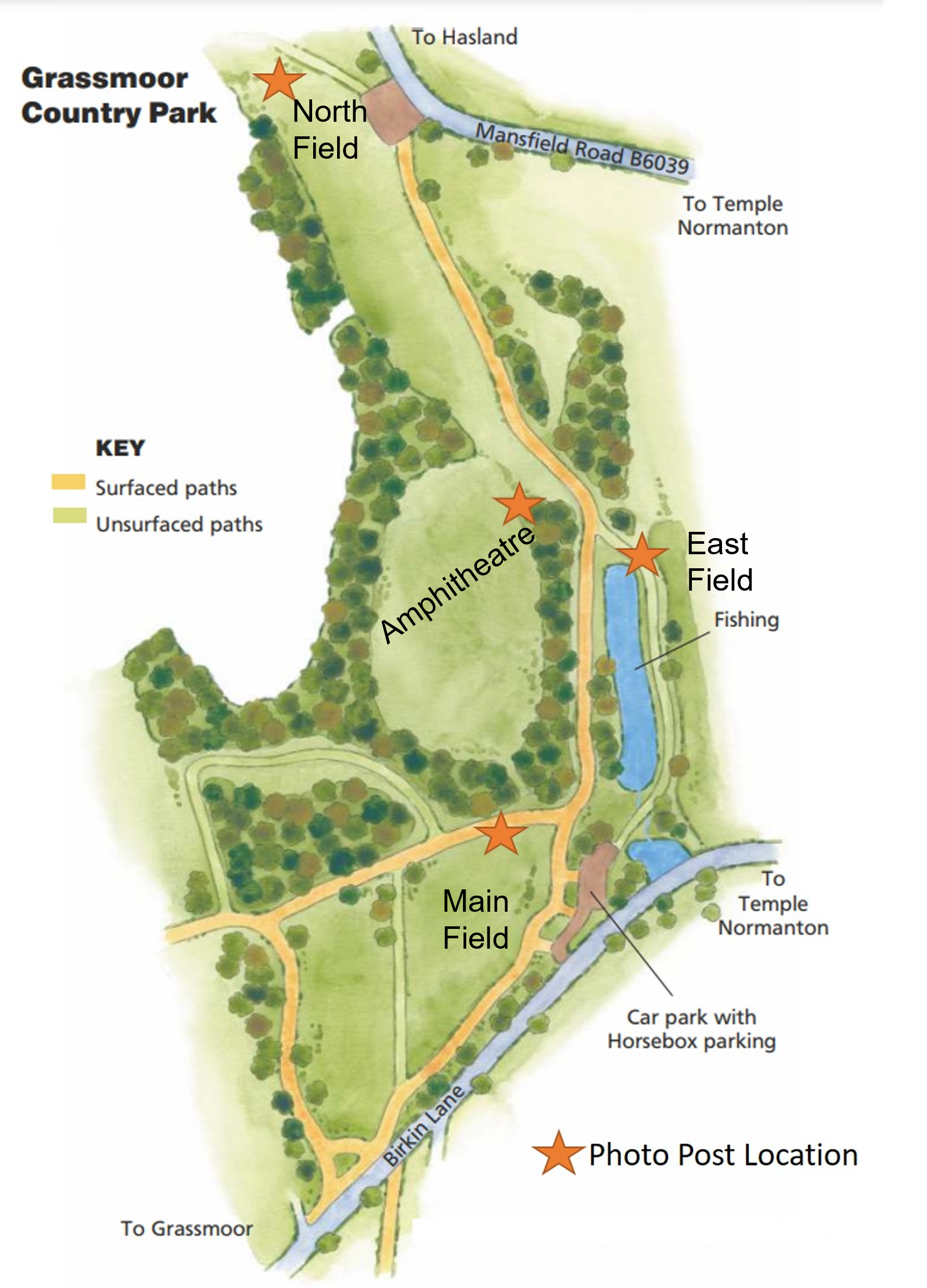
Works have taken place in four key areas within the park (see map).
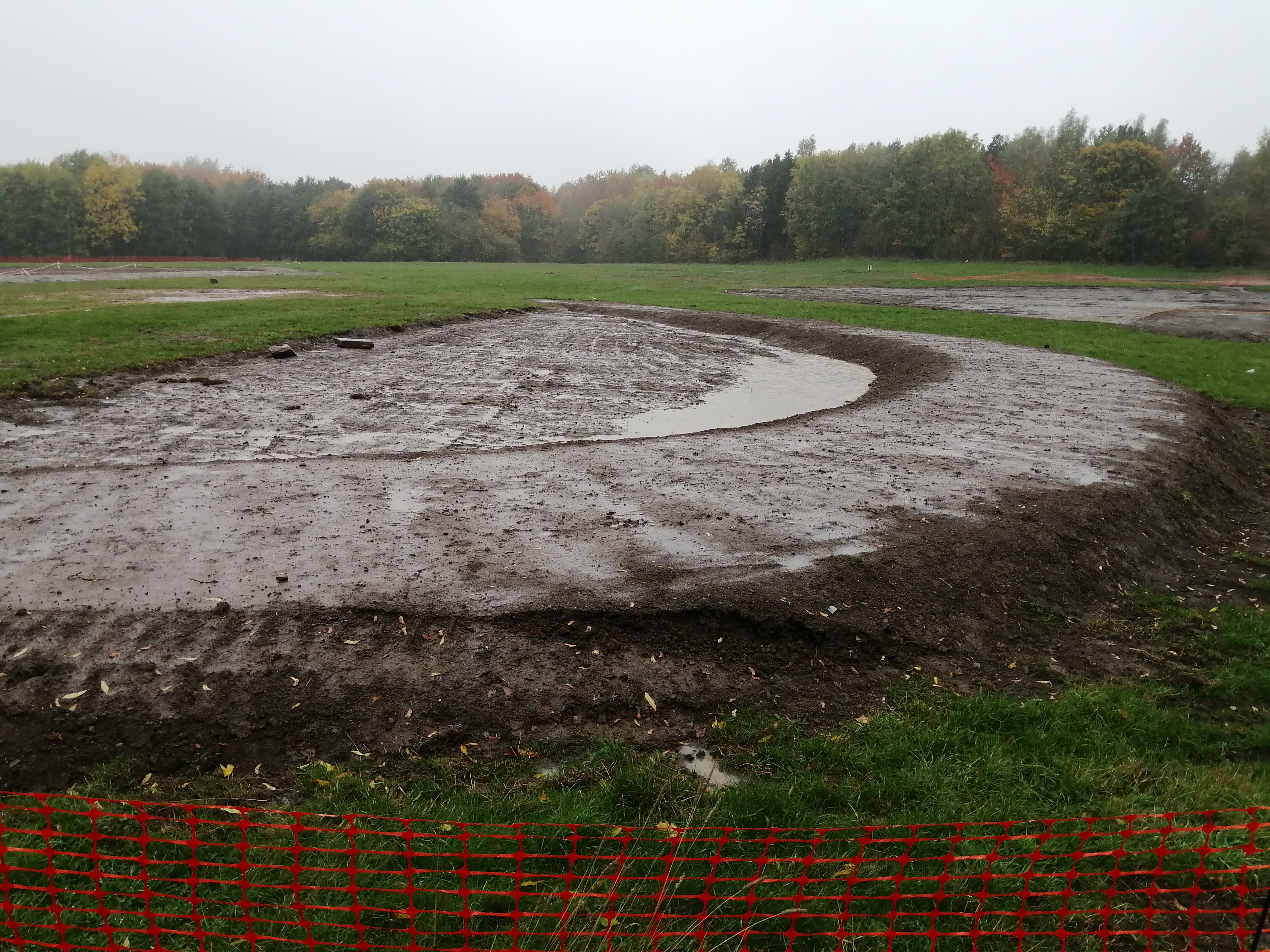
Main Field
Shallow depressions have been dug out in three locations here with the spoil used to create the earth bunds across the slope of the grassland. When it rains, water collects behind the bunds in the depressions forming temporary shallow pools. This water slowly drains through the bunds and eventually makes its way to two shallow channels that drain under the footpath and down towards the main pond in the park. Some of the excess water will evaporate and the rest will reach the main pond at a much slower rate than it would have done before the bunds were in place. The vegetation is already making a comeback here and once it’s had more time to grow, these features will blend back into the landscape with the bunds also acting as raised walkways, helping people to avoid boggy areas over winter.
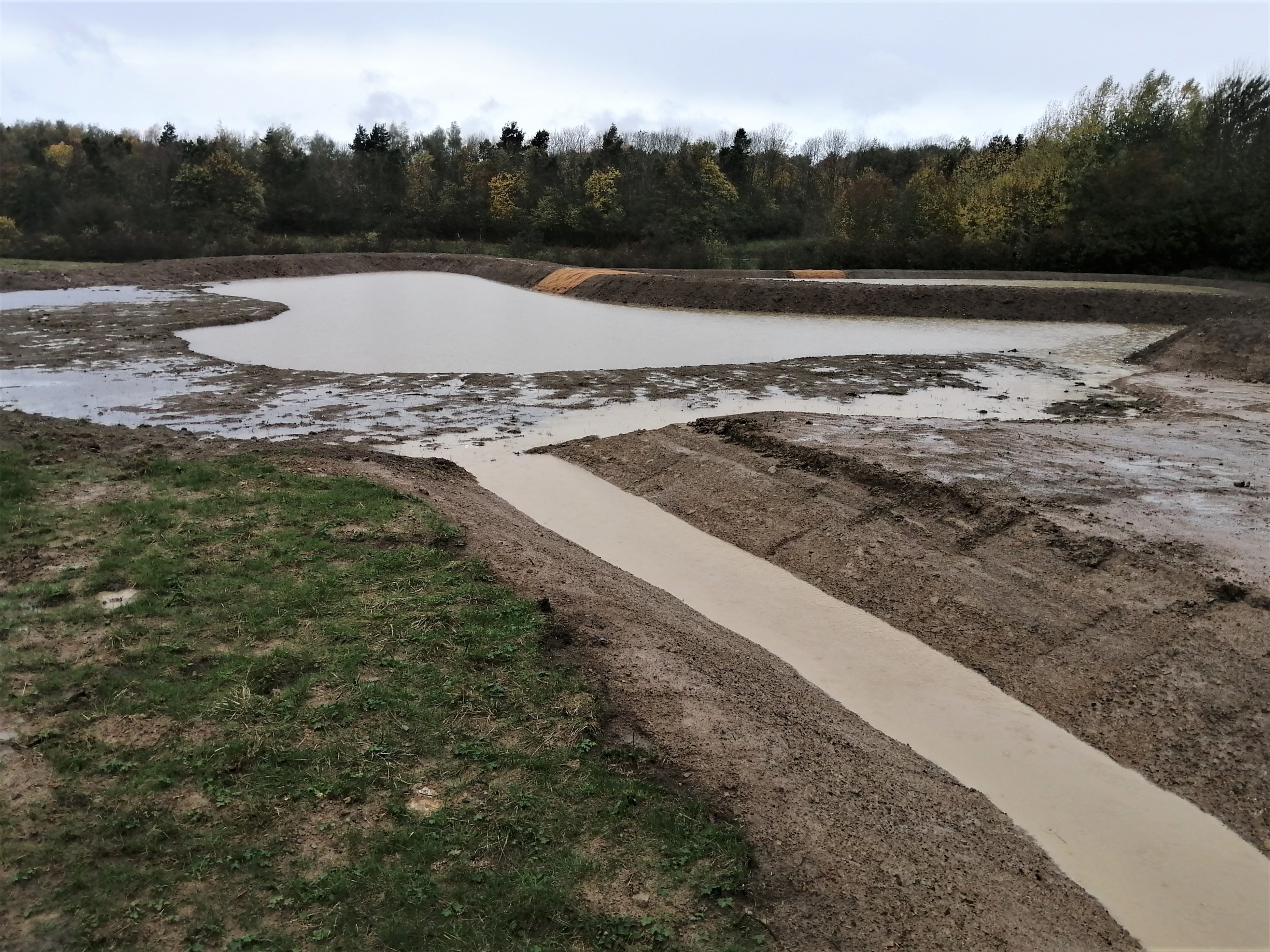
East Field
There is both a stream and a spring in the north east corner of this area that runs into a narrow straightened channel along the field boundary and then into the main pond in the park. A couple of leaky woody dams have been placed in the channel causing water to back up behind them during heavy rain. A new channel has been created which allows this backed-up water to flow into the field and collect behind two large bunds. The ground behind the bunds has also been lowered creating plenty of storage space for storm water. We’ve had quite a few downpours since the works were completed here and the amount of water being held back is quite something! Water slowly drains through leaky sections of the bund and eventually back into the pond. The leaky dams have been designed to feed some water into the storage ponds throughout the year which will hopefully allow vital wetland habitat to flourish in the park yet still provide plenty of extra storage capacity during times of heavy rain. With a bit of luck, we might even start to get some winter waders visiting this part of the park so we will be keeping a keen eye out. Do let us know if you spot any interesting wildlife while visiting the park!
The entrance into the East Field is currently blocked off as some tweaks are needed here to allow the water to drain into the pond underneath the footpath rather than over it. As soon as conditions allow, this will be rectified.
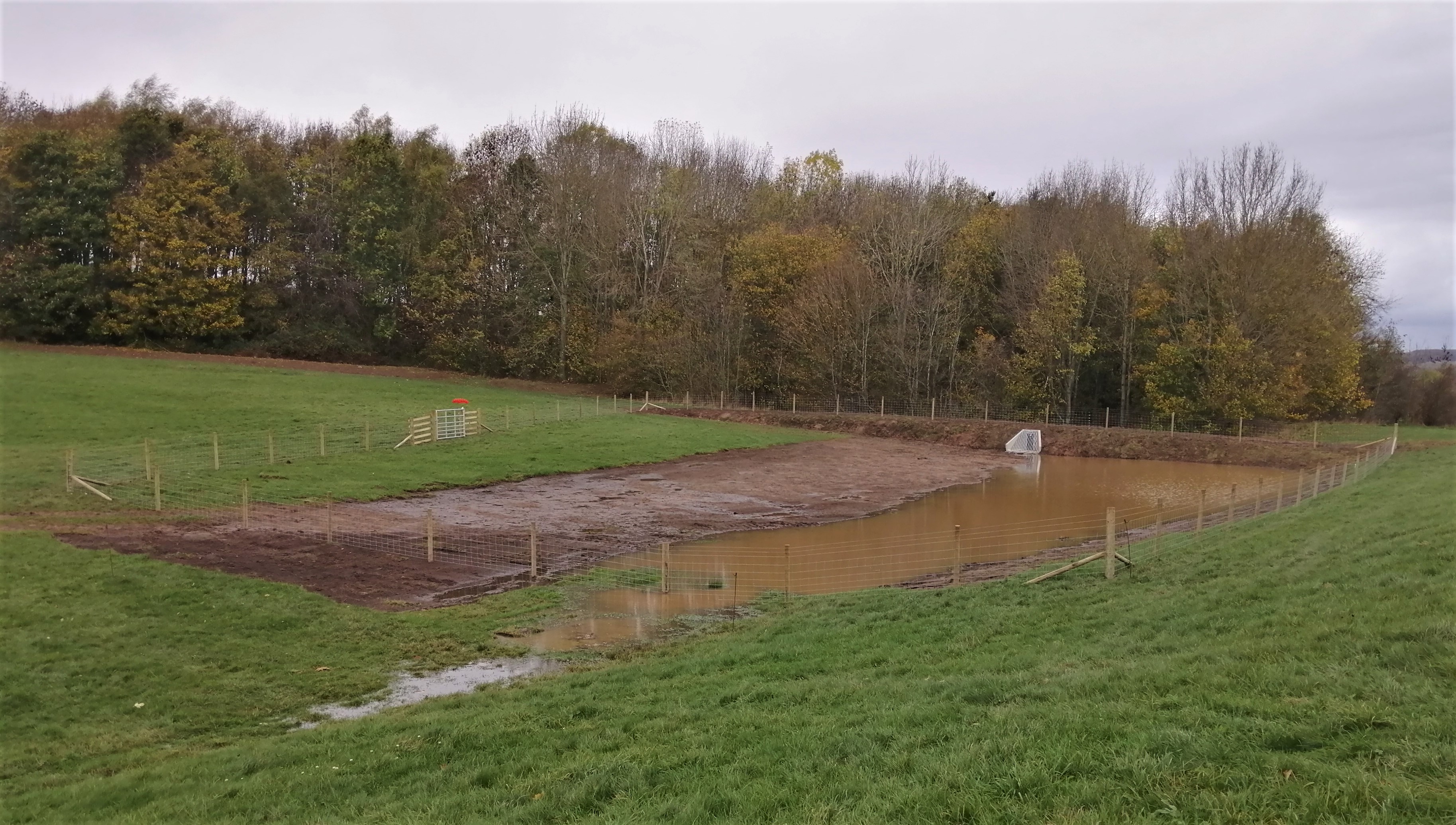
Amphitheatre
The bowl-like area in the middle of the park, originally designed as a speedway track when the park was created, already held back water during the winter months, but it would leave behind a muddy puddle and restrict access in this area. We wanted to create a more lasting wetland habitat, provide greater storm water storage and improve access. A large earth bund has been put in place to allow more water to collect behind it and for it to be stored for longer, creating a more permanent pond. Excess storm water will slowly drain through a pipe that runs through the bund. The top of the bund also functions as a path to complete the circular route around the Amphitheatre. We will do some planting in the spring to introduce pond plants and create a more interesting habitat here than the muddle puddle it once was! A fence has also been put in both for safety in times of high waters and to provide some protection for wildlife. Shallow areas have been dug out beyond the ponded area too to provide a little more space for water storage. If you’re wondering what the strip of grass in the middle is for, it’s where there are some underground utilities that had to be avoided!
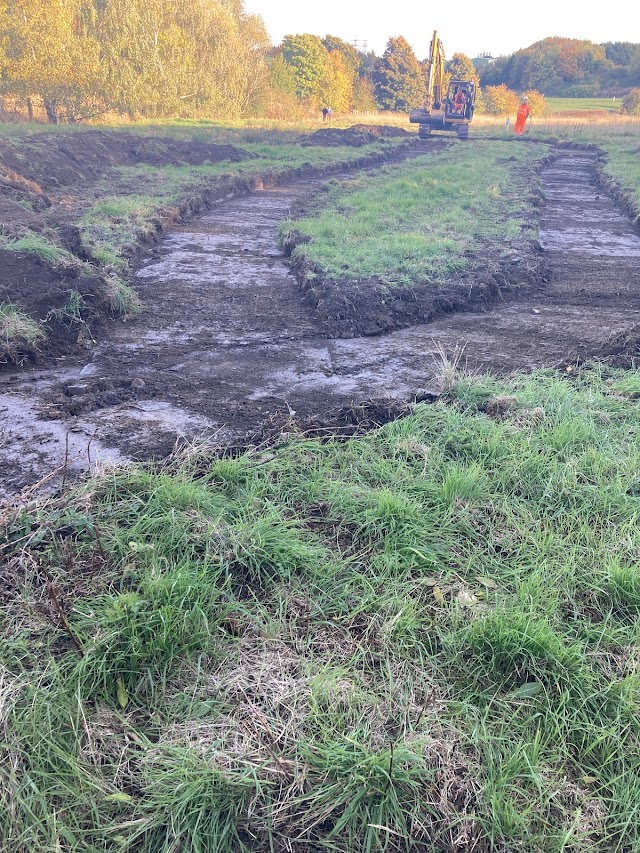
North Field
This is a small area down towards the Corbriggs end of the park. A ditch runs along the boundary that takes runoff from the slopes inside the lagoons area of the park. Like in the East Field, a leaky dam has been placed in the ditch which will cause water to back up behind it during heavy rain causing it to spill out into two shallow channels. Water in these channels will run through the field and then join the main stream leaving the park, which flows into the Calow Brook. Mining remnants are quite close to the surface in this part of the park so we were limited to a small-scale feature but it will still provide an important pocket of wetland habitat that can act as a stepping stone for wildlife.
Grassmoor’s Meadows
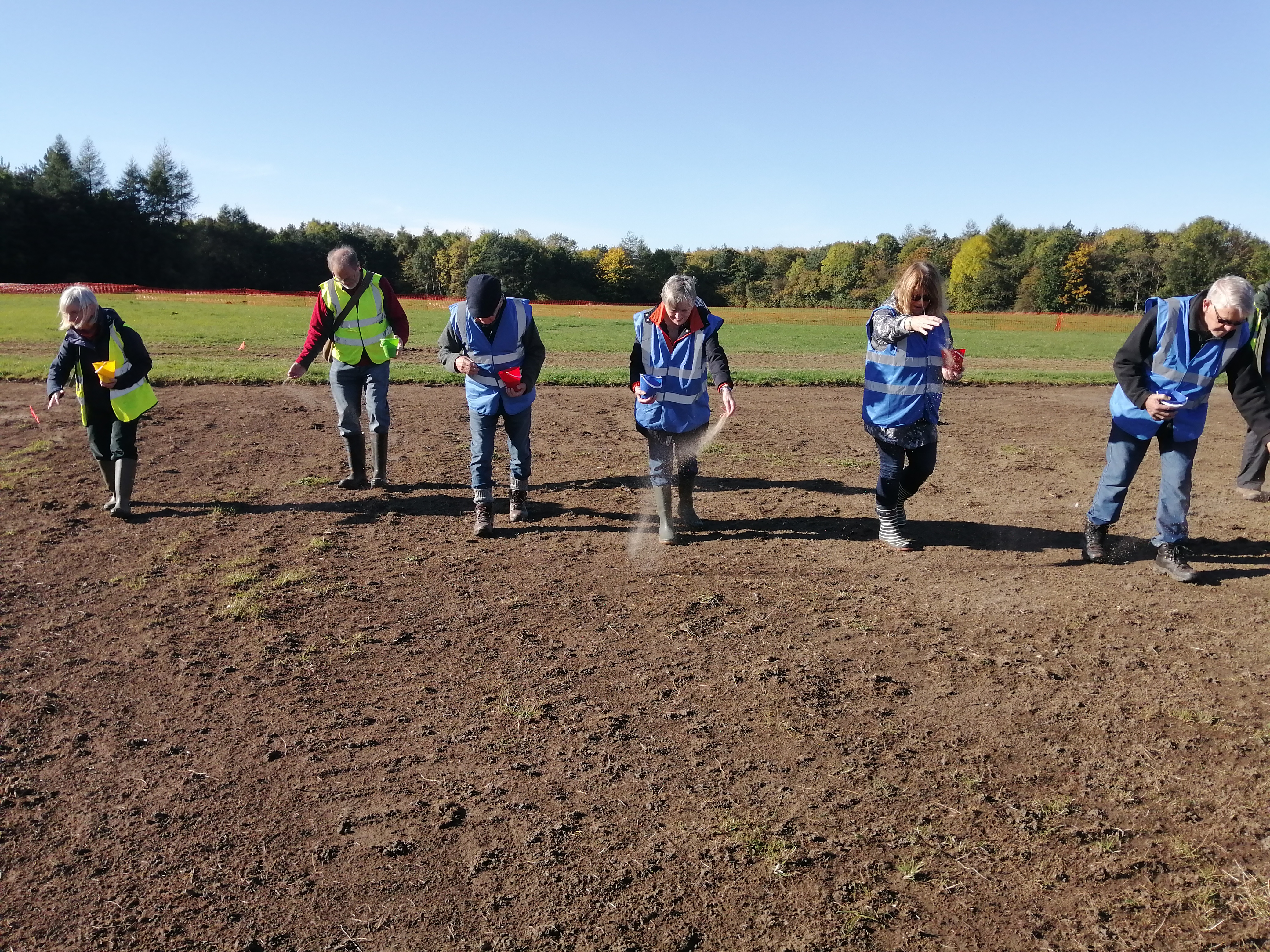
Throughout the work, all of the important meadow topsoil, full of seeds, was saved and carefully spread back on top of the finished features. This means the seedbank from the flowers and grasses will be able to grow again, retaining the lovely meadows of the park. On top of this, we have been busy sowing the bare earth with additional seed mixes that will introduce a greater variety of species into the park, including those more suited to wetter conditions. We have also been busy sowing the bare earth with seed mixes that will introduce more variety of species into the park including those more suited to wetter conditions. A massive thank you to all the volunteers from both DCRT and the Friends of Grassmoor who have been helping with the sowing and “putting the grass back into Grassmoor” as Dan, DCRT volunteer, quite rightly pointed out! These have been very enjoyable days with many hands making light work and we couldn’t have done it without you. It’s very exciting to see the vegetation coming back already. These areas are being temporarily fenced off to allow the vegetation to establish so we’d hugely appreciate visitors and their furry friends giving these areas the space they need.
Get Involved
We’ll be running more sowing and planting days in the spring and vegetation surveys in the summer so do let us know if you’d be keen to help out and we can keep you updated. Our fixed point photography posts are still up in the park and we’d love it if you could keep sending through your pictures while visiting so we can capture how all of the features develop through the year and function during and after storms.
Thank you!
Massive thank yous to everyone who has supported the project and helped see it through including The Friends of Grassmoor Country Park, Penny Anderson Associated, Callidus, Viso Management, Ebsford, the EA and Derbyshire County Council Flood and Countryside teams as well as the Green Recovery Fund and Heritage Lottery Fund.