In this blog Project Volunteer Coordinator, Anthony Cox will explain the dangers of the invasive plant species Giant Hogweed and how it affects everything else in its local environment.
In the last couple of weeks, I have started to see Giant Hogweed coming up so I thought it would be a good time to write about it as it can be very dangerous for both humans and pets. Giant Hogweed is an annual plant, this means that the seeds sit in the ground over the winter and then will emerge in the early spring growing up to a height of around 3.5 meters or 11.5ft with leaves that can be 1.5 meters long. Each plant produces from 20 – 50,000 seeds which are penny sized and paper thin. Due to this ability to grow very tall, have huge leaves and produce so many seeds Giant Hogweed easily outcompetes our native plant species.
But why is it so well adapted? The reason it is so successful in our environment is because of our mild climate. Giant Hogweed originates in the Caucasus Mountains which run across Russia’s border with Georgia and Azerbaijan. This environment would be prone to changes in heat and cold and would be prone to landslides and extreme changes in weather conditions. These factor mean that any plant that has evolved in this environment has to be very well adapted to survive. However, any plant that has evolved in the UK would have had very mild weather conditions on nice flat land making these plant less hardy. Therefore when the Victorian explorers brought back Giant Hogweed to use as an ornamental plant in gardens it escaped and out-competed the other plants in the area.
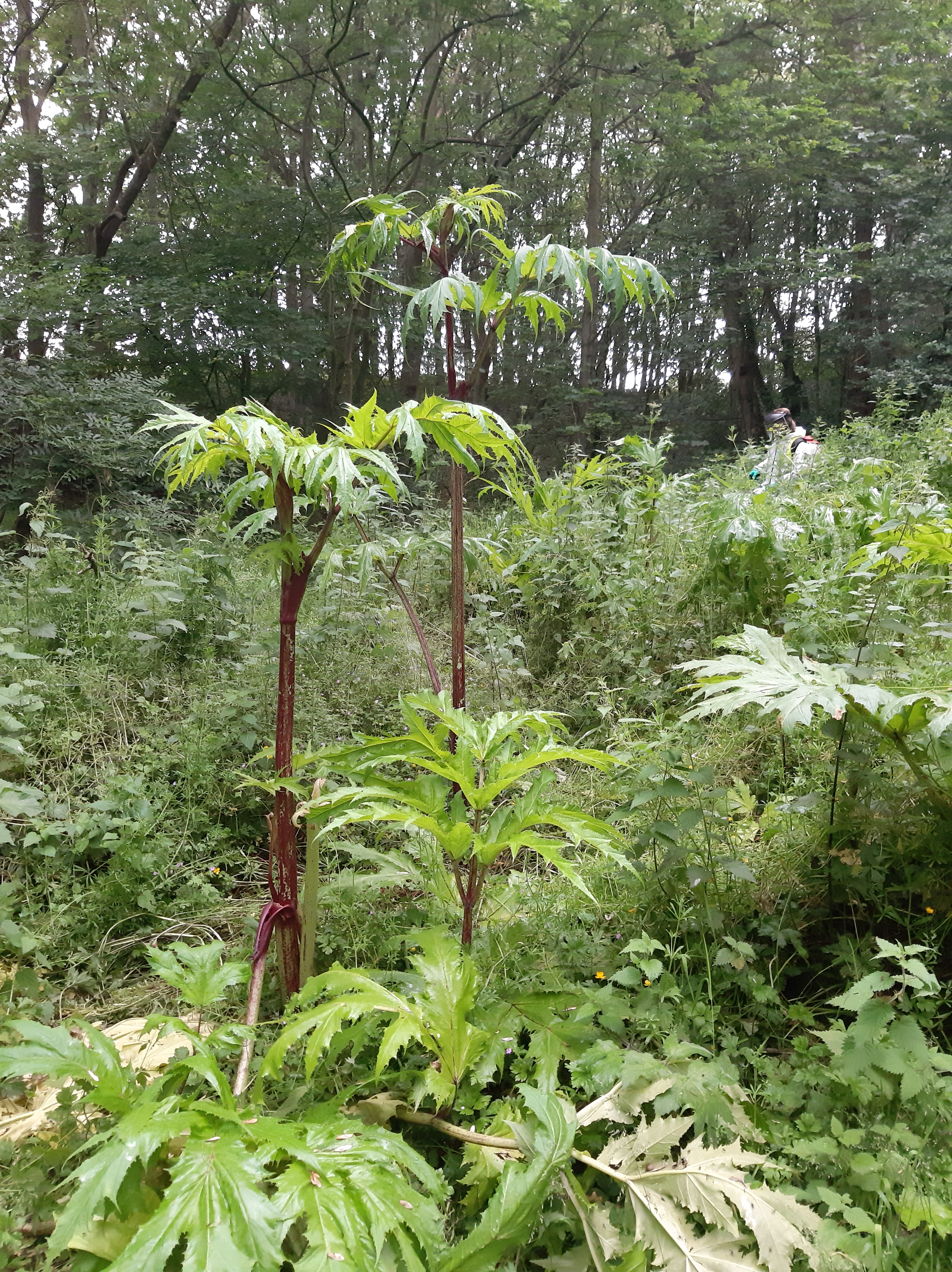
Now you may be wondering why at the start of this blog I said that Giant Hogweed was dangerous? Well as I have mentioned Giant Hogweed evolved in a very difficult habitat so has developed a certain system to prevent the animals in the Caucasus Mountains from eating it. The sap of the plant has chemicals in it that can cause an effect called photodermatitis or photosensitivity where your skin has the amount of sunlight it can absorb reduced causing an extremely severe sunburn. This can effect pretty much any living animal including Humans, Dogs, Foxes, Deer and pretty much anything you can think of. Giant Hogweed can only burn you however if it is damages so its internal sap can get on your skin.
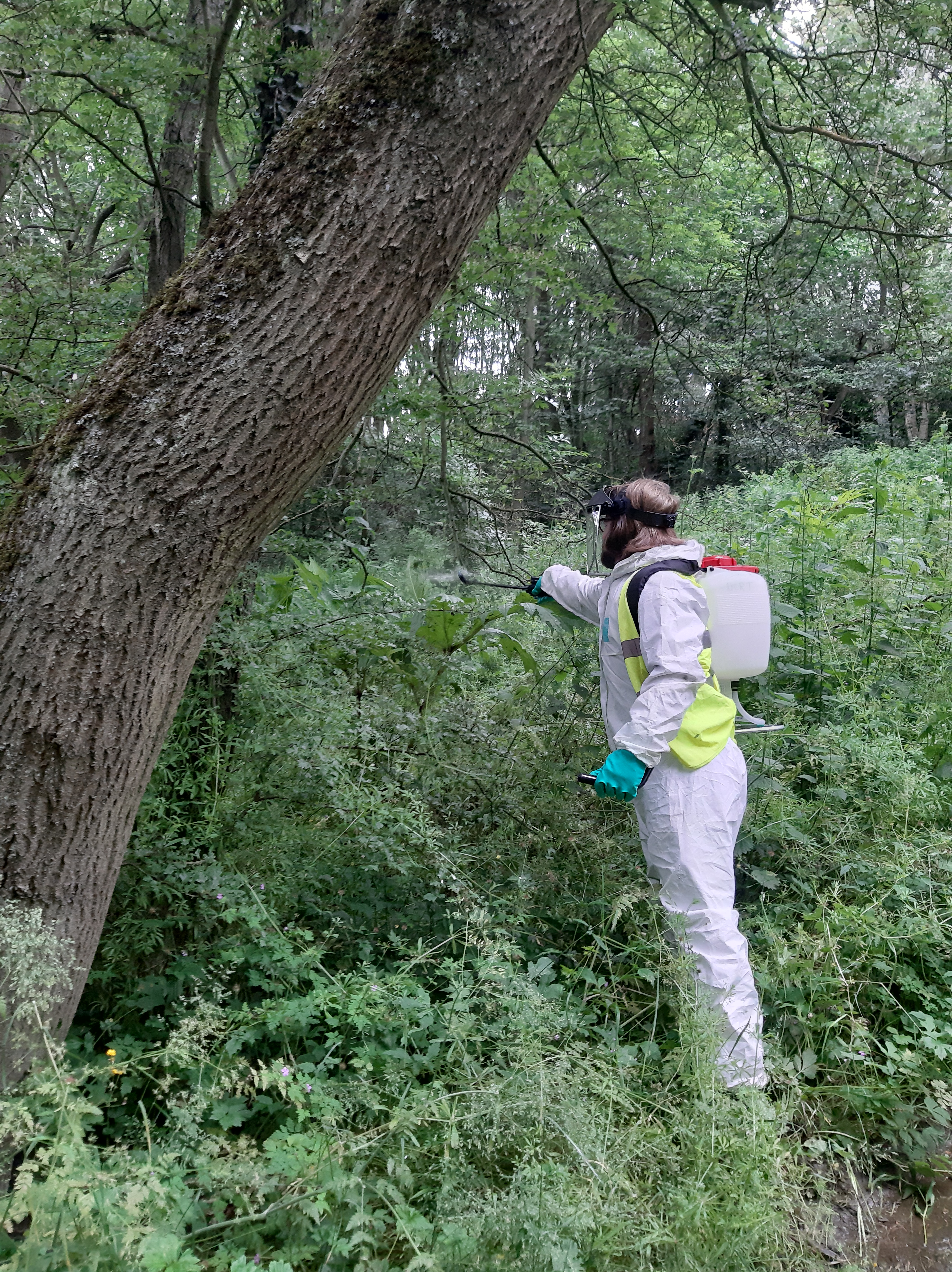
So how can we remove this invasive plant? Unlike other invasive species like Japanese Knotweed and Himalayan Balsam if you cut Giant Hogweed at the base it will not regrow or spread. However it is very difficult to cut through a plant when its sap can cause sever burns to your skin. You can cut through the base of the plant using the pole saw however I would not advise doing this at all! What I would advise is that you should report any sighting of Giant Hogweed to the Environment Agency and they will send an trained team to spray the plant. This is when they use pesticides to spray the top of the plants leaves causing it to die. This must be done when the plant is lower than head height as it is extremely difficult to spray a plant tallet than you. This is because you need to pray the top of the plant to have the most effect on it. It also must be done before the plant has produced it seed head as then it is able to spread the seeds and produce more plants.
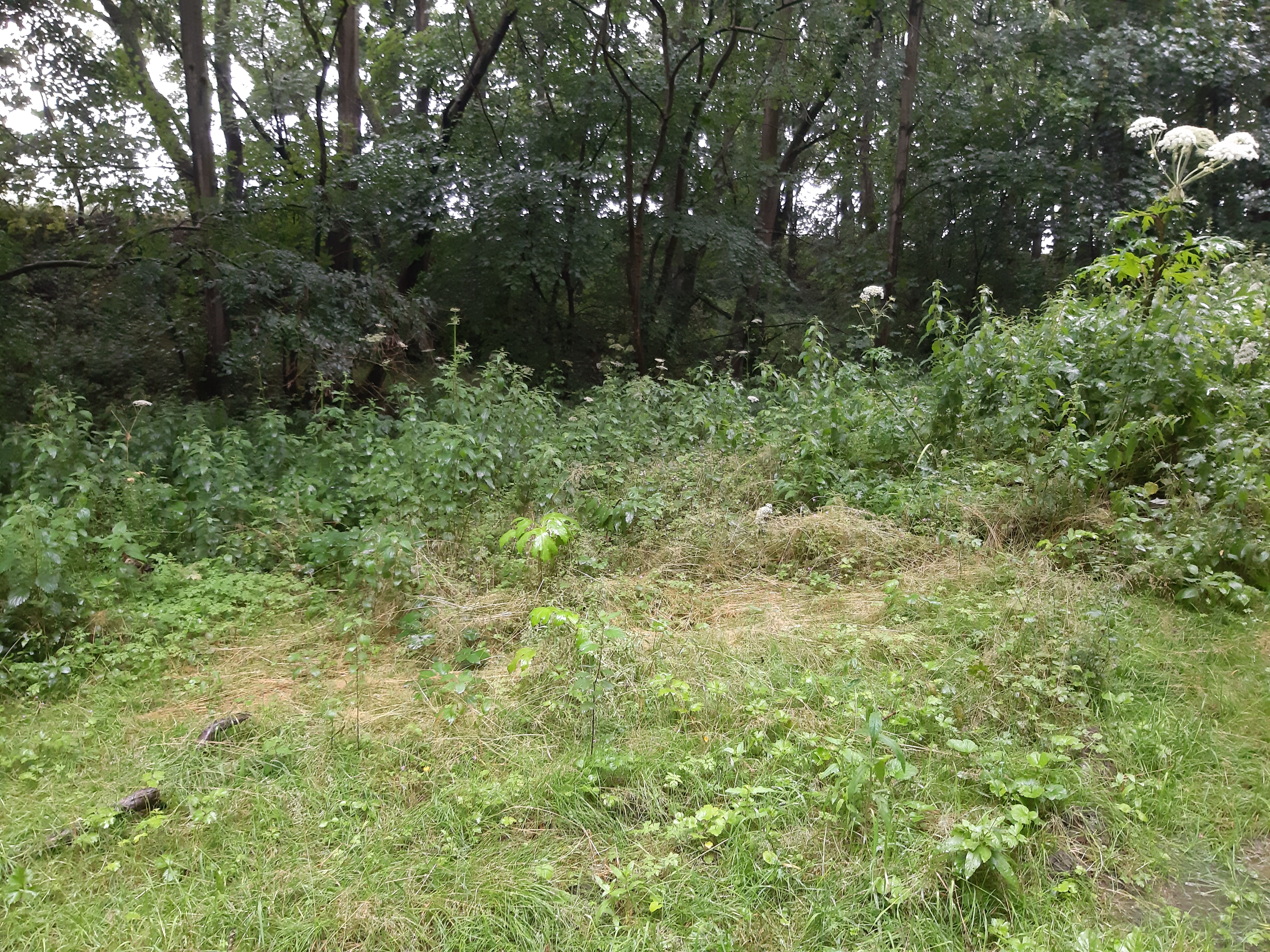
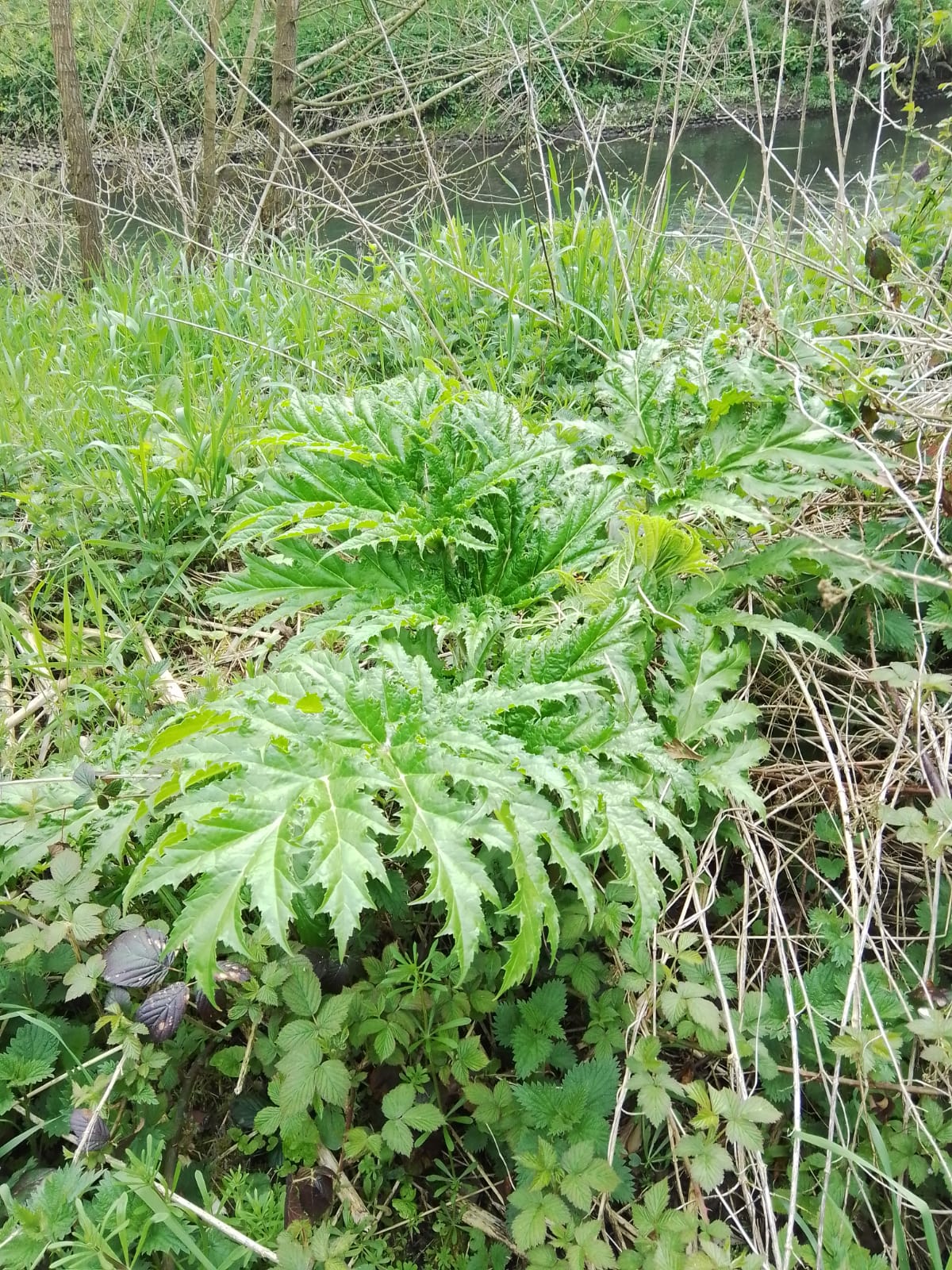
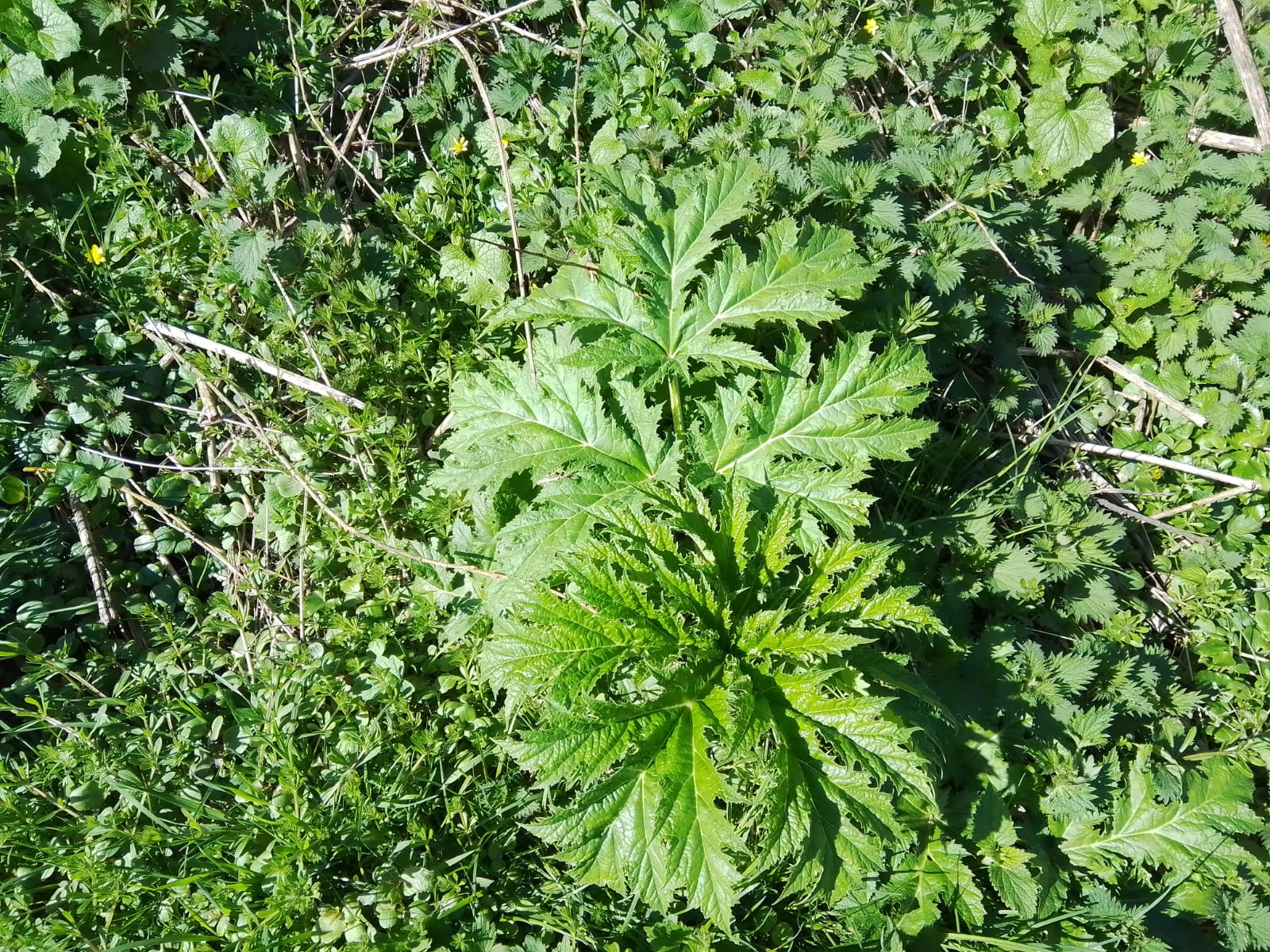
How can you help to tackle this invasive plant and prevent yourself from being injured by it? The best way you can help is by being able to identify the plant. This would also mean you know what to avoid and therefore you would not be injured by it. The problem with this is that the plant has a relative in the UK. Hogweed or Cow Parsnip is a native plant that looks very similar to the invasive Giant Hogweed in the early spring. Both plants have large, segmented leaves with bristles on the underside. The differences would be that Giant Hogweed is a lighter shade of green and has pointier looking leaves which I would describe as being more aggressive looking. Also, the native plant has a solid purple stem early in the season where the Giant Hogweed has a purple ring around its node. Later in the season it is much easier to tell, the two species apart as Native Hogweed grows up to a height of 2 meters so is dwarfed by Giant Hogweed. Below are pictures of the Native and Non-Native Hogweed plants so you can see them early in the spring (the most difficult time to tell them apart).
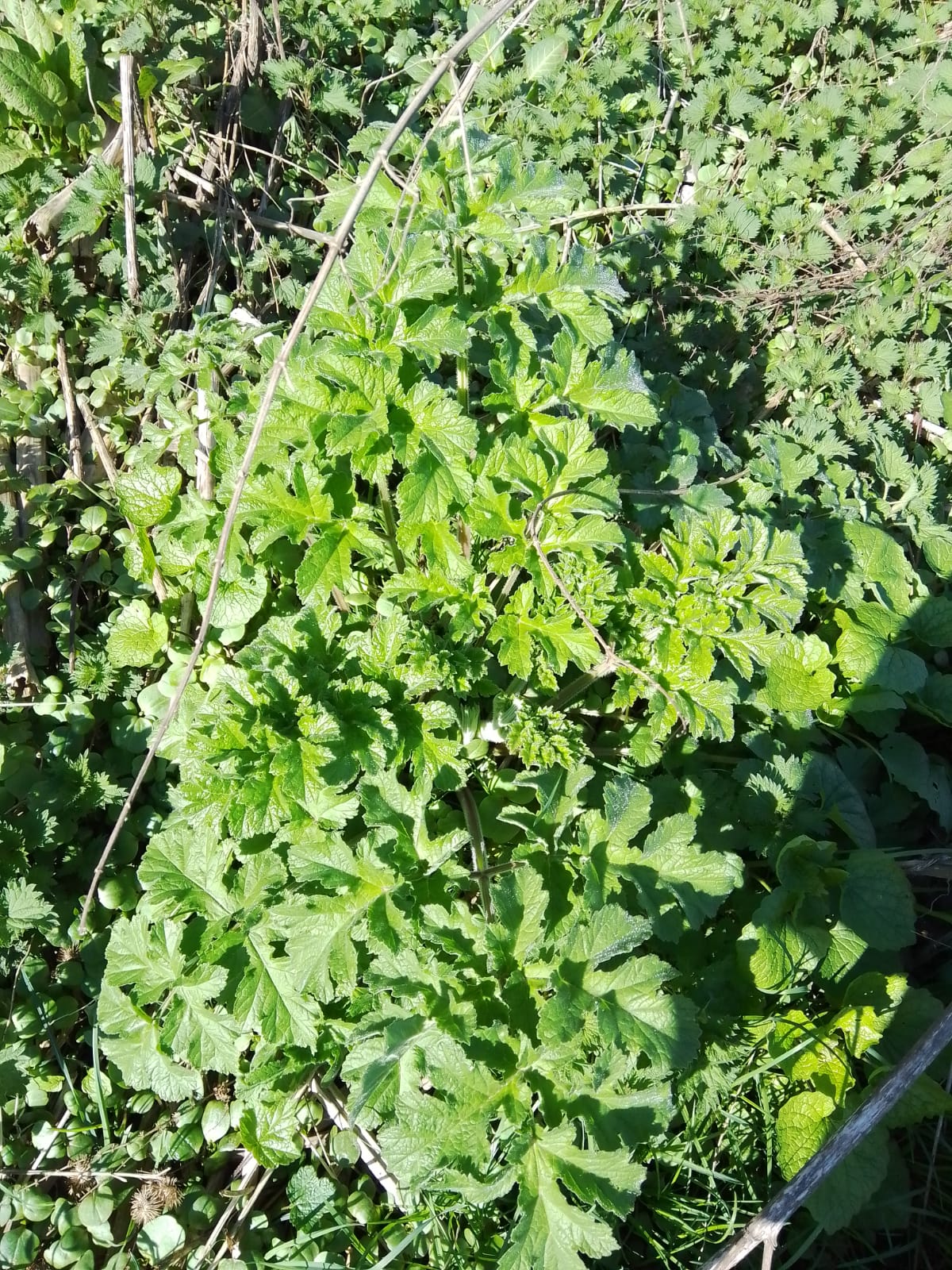
To report a sighting of Giant Hogweed on public land you should contact your local council.
Finally I felt this was a good opportunity to explain the differences between non-native and invasive species. A non-native species is a plant or animal that dose not have its origins in the part of the world it is in when referring to an individual. This I generally brought over by humans either on purpose or by accident. Sometimes these plants or animals can co-exist with the native species without causing, an example would be Sycamore which is from Eastern Europe. An Invasive species is one that has an effect on the local environment. The best example of this would be the Grey Squirrel. They were introduced into the UK in 1876 to be used as an ornamental species for stately homes (the Victorians did this a lot and is where most of the invasive species in the UK came from). These Squirrels escaped and carried a disease known as Squirrel Pocks which had no effect on the Grey Squirrels as they had developed an immunity to the disease however it pretty much wiped out the native Red Squirrels. Also, the Grey Squirrels out-compete the native Red Squirrels for the same food. So in conclusion an invasive species has to be non-natives but not every non-native species in invasive.