This week’s blog is brought to you by Community Engagement Officer, Sally Hyslop, with tips on how to start spotting and identifying fungi…
The fungal lifestyle has evolved many times, and with well over 15,000 species in the UK alone, fungi are notoriously tricky to identify. There are of course a few easy species, with distinct features we can all learn to spot, such as the classic fairy toadstool, Fly Agaric (Amanita muscaria) or the wonderful Poorman’s beefsteak (Fistulina Hepatica) which looks just like a rare rump steak… sprouting out of a tree! This blog is a little insight into how to start identifying some of the more common groups of fungi and what to look out for.
So if you’ve spotted any fantastic fungi on your river walks this Autumn, and wish to learn how to identify them… read on.
Think of them like an apple on a tree!
Fungi are often thought of as a whole organism, but really, they are only the fruiting part of a much larger organism hidden underground or within rotting wood. The majority of fungi is made up of networks of thin branch like threads, called mycelium which work to decompose and break down material. Like a fruit, the fungi are there to start the next generation but, instead of seeds they spread spores. Fungi fall into two main groups – spore-shooters (Ascomycetes) or spore-droppers (Basidiomycetes). We’ll be looking at some of the spore droppers in today’s blog and we’ll be particuarly focusing on some of the easy-to identify groups of mushrooms and toadstools.
Identifying Mushrooms and Toadstools
First off let’s chat about the classic mushroom and toadstools we see popping out of the leaf-litter this time of year, often in wonderful ‘fairy rings’ around old tree stumps! Some of these have bright caps in wonderful colours, so are easy to spot hiding on the woodland floor. When looking at toadstools you need to prise up the whole mushroom (be careful to wash your hands after touching fungi, as some are poisonous!). Looking at the whole mushroom is essential as for some groups identification features will be hidden at the base. Take a good look at all the different features of the fungi – these will help you work out where this mushroom belongs on the mushroom tree of life!
Some features to look out for…
1) The shape of the stem, called the stipe
What shape is the stipe? Does it have a ‘skirt’ around it? Does it has an egg-cup like bulb at the bottom?
2) How is the top of the mushroom attached to the stem?
Cut the mushroom in half to see – Are the gills attached to the stem or free? Do they travel down the stem or meet the stem at the top?
3) Look at the underside of the cap
Is it full of small holes, a textured pattern or does it have gills?
4) What habitat have you found this mushroom in?
Did you find it in pine, mixed or deciduous woodland? What was it growing on – leaf litter, a living tree, rotton wood?
5) The Spore Print
For fungi with gills – cut off the stipe, pop the cap on some paper, then leave it overnight. A beautiful spore print pattern will emerge on the paper! What colour are the spores – Pink, white, olive, brown?
Mushrooms and Toadstools are sometimes referred to as Agarics. These are the mushrooms that drop spores out of their gills. We will also meet the Boletes, in today’s blog, which instead drop spores out of long tubes!
Brittle-gills, Russula
Often brightly coloured caps with pure white stipes. Look at the underside of the cap for perfectly formed, neat gills which stretch from the inner stem, right to the edge of the cap, with no intermediate or short gills in between! Touch the perfect gills and see if they break easily… if so, you have a species of Brittle-gill.
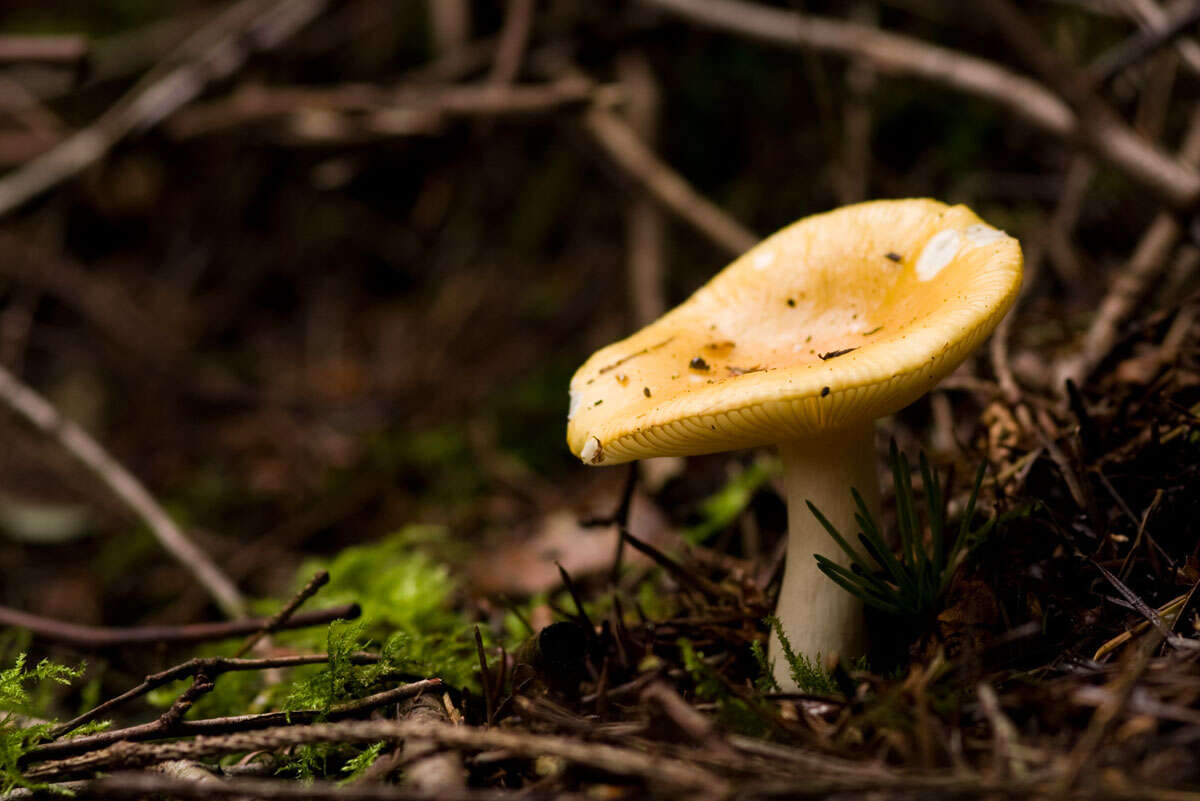
Milk-cap, Lactarius
Similar looking to the brittle gills, with bright stipes and colourful caps. Their gills however are a little messier, with many short, intermediate gills in between longer ones. And if you break them with your finger and wait a short moment, little droplets of ‘milk’ will start to emerge.
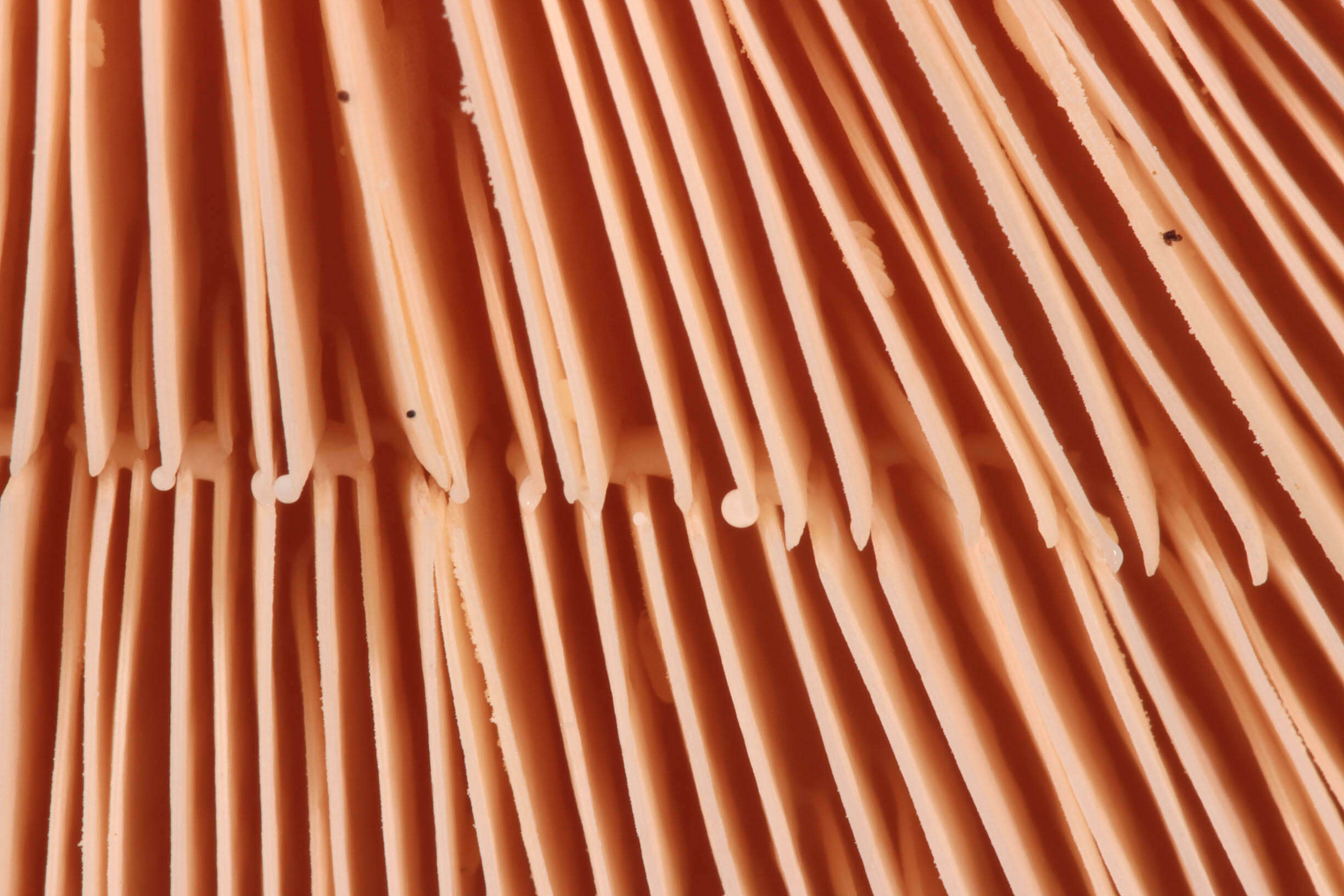
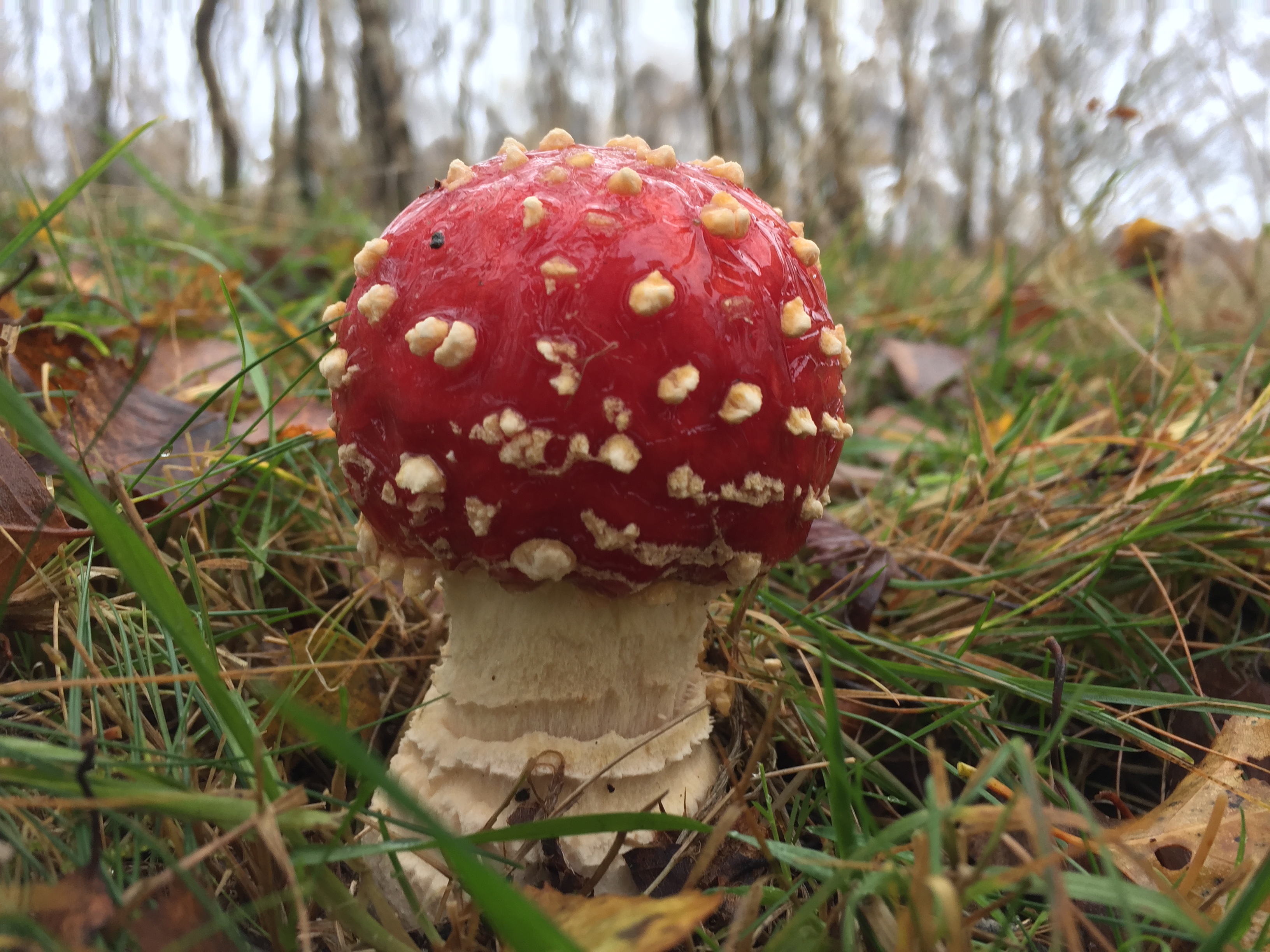
Amanita
Toadstools with an egg cup on the base and/or a frilly skirt around the stipe, should be a warning to you. These features indicate a group of mushrooms called the Amanitas, which include some of the deadliest mushrooms around… such as the Death Cap (Amanita Phalloides) – deadly poiosonous.
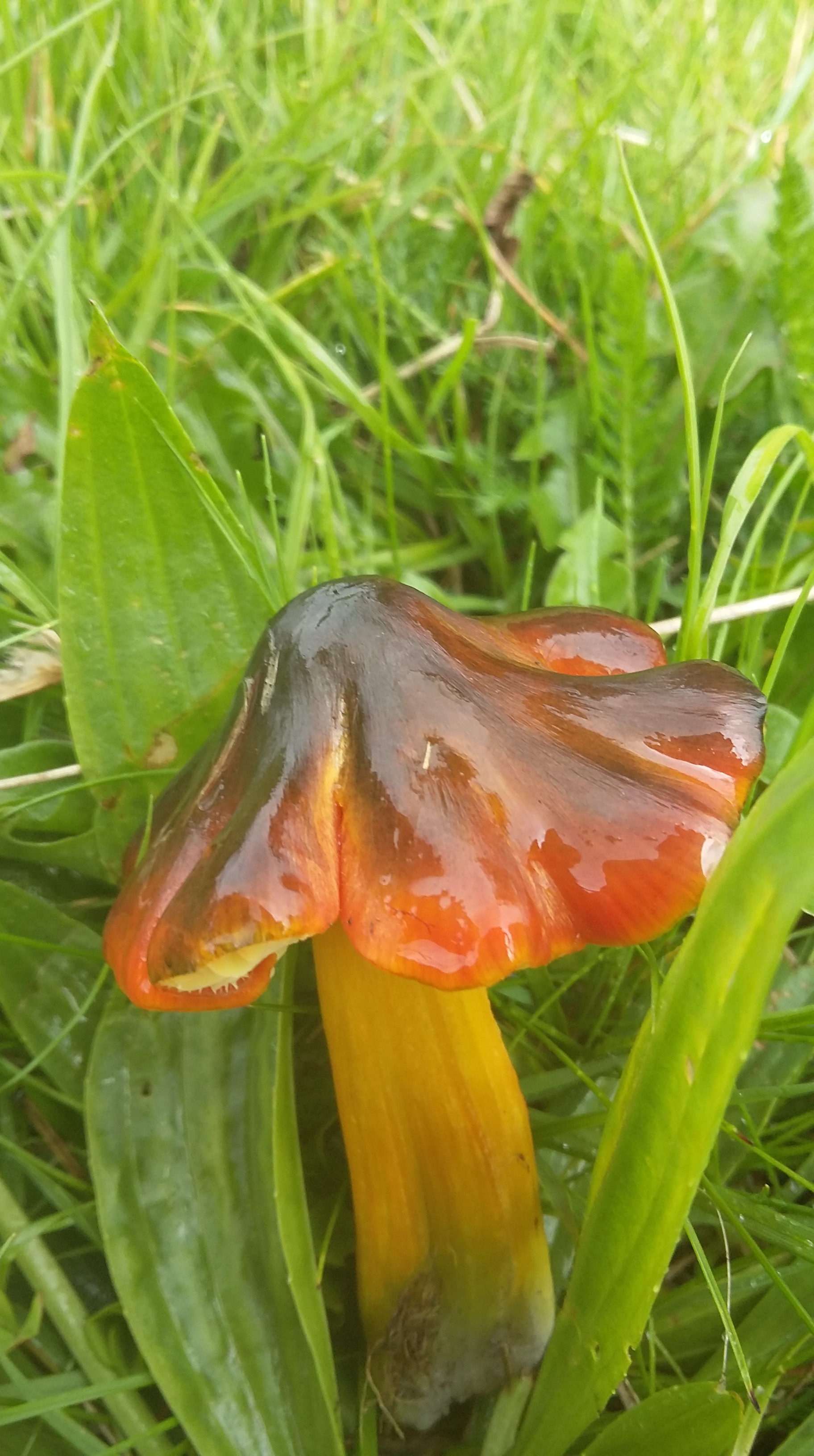
Waxcaps, Hygrocybe
Bright colours, pointy-hats and slimy, waxy textures indicate waxcaps which spring up in fields and pastures. These beautiful mushrooms include the beautifully shaped, pink ballerina waxcap (Hygrocybe calyprtriformis), the honey waxcap (Hygrocybe reidii), which smells of sweet honey, and the brilliant parrot waxcap (Hygrocybe psittacina) which changes colour from green to yellow to red!
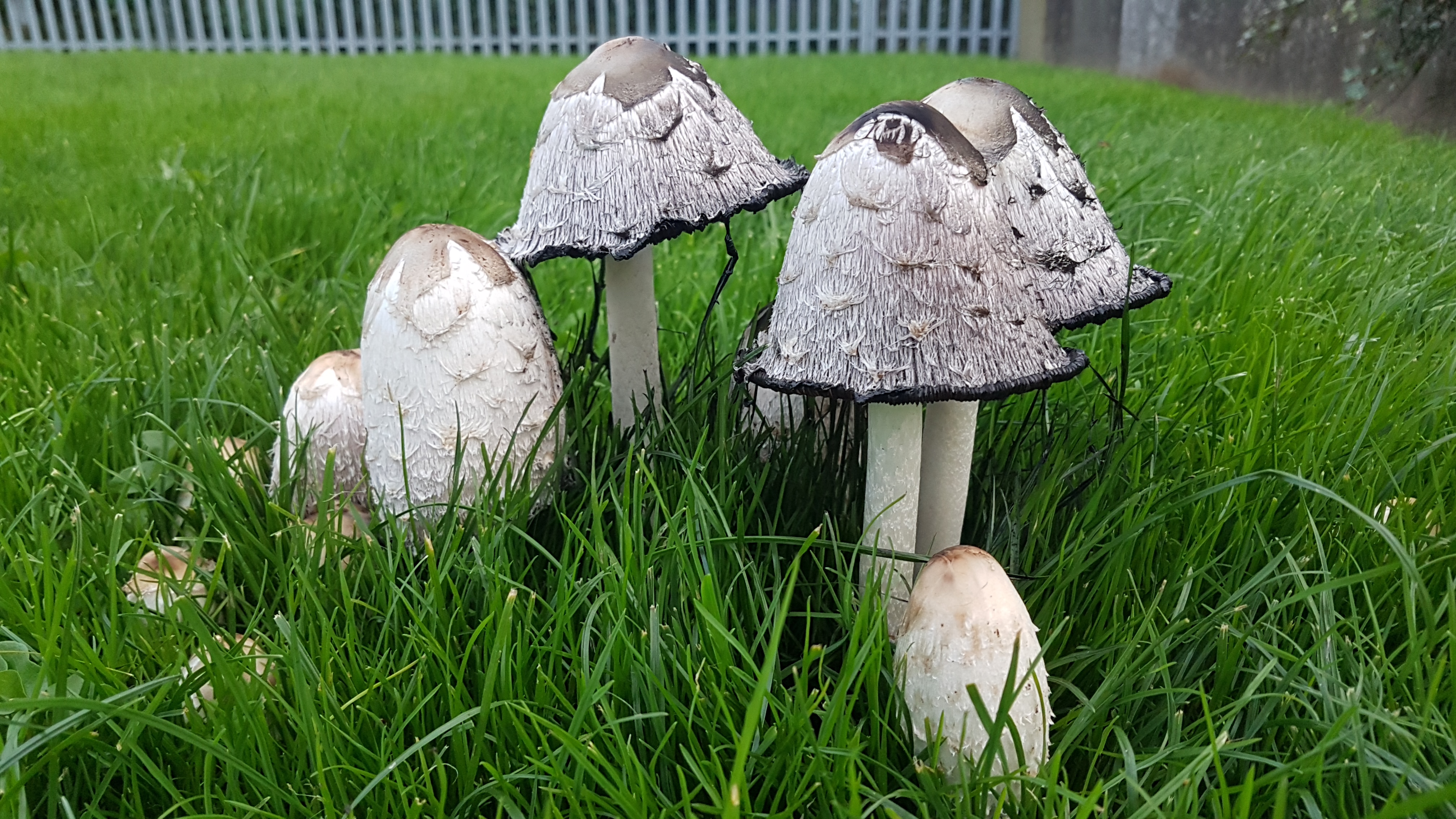
Ink-caps, Coprinus and Coprinopsis
A black or brown, cap under patches of white, woolly veil make ink-caps distinctive. As they age, they deliquesce, disintegrating into a dark black, inky mass.
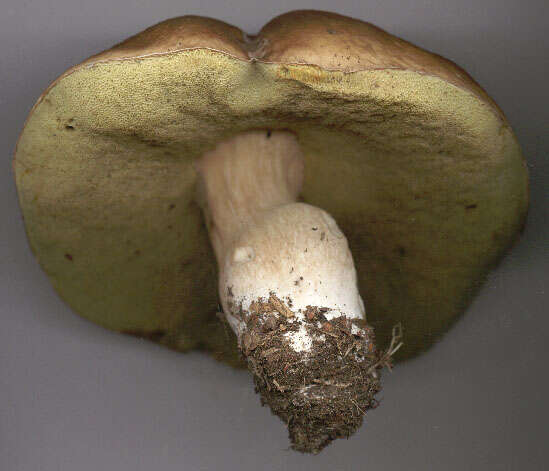
Boletes, Boletus
Large, bulbous mushrooms where gills are not horizontal but instead run down the cap vertically, like long tubes. What we see from the underside is a sponge like appearance of little holes. Some bolete species have dramatic reactions to the air when cut… slice one in half and it may suddenly turn blue!
Let us know what you find on your next fungi foray!