This article was originally published in the local publication in Doncaster called The Hexpress. We are adding the article to our blog so that we can share it with the DCRT audience.
Hear from Sally Hyslop about the River Guardians program for primary students, how outdoor learning can help improve brain function, and how you can get involved with your local Rivers Trust.
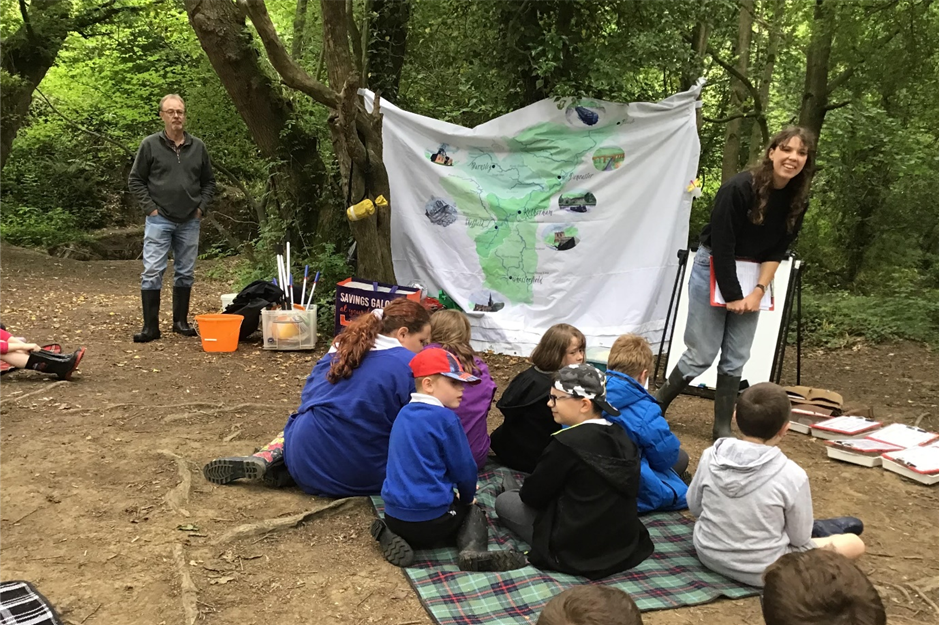
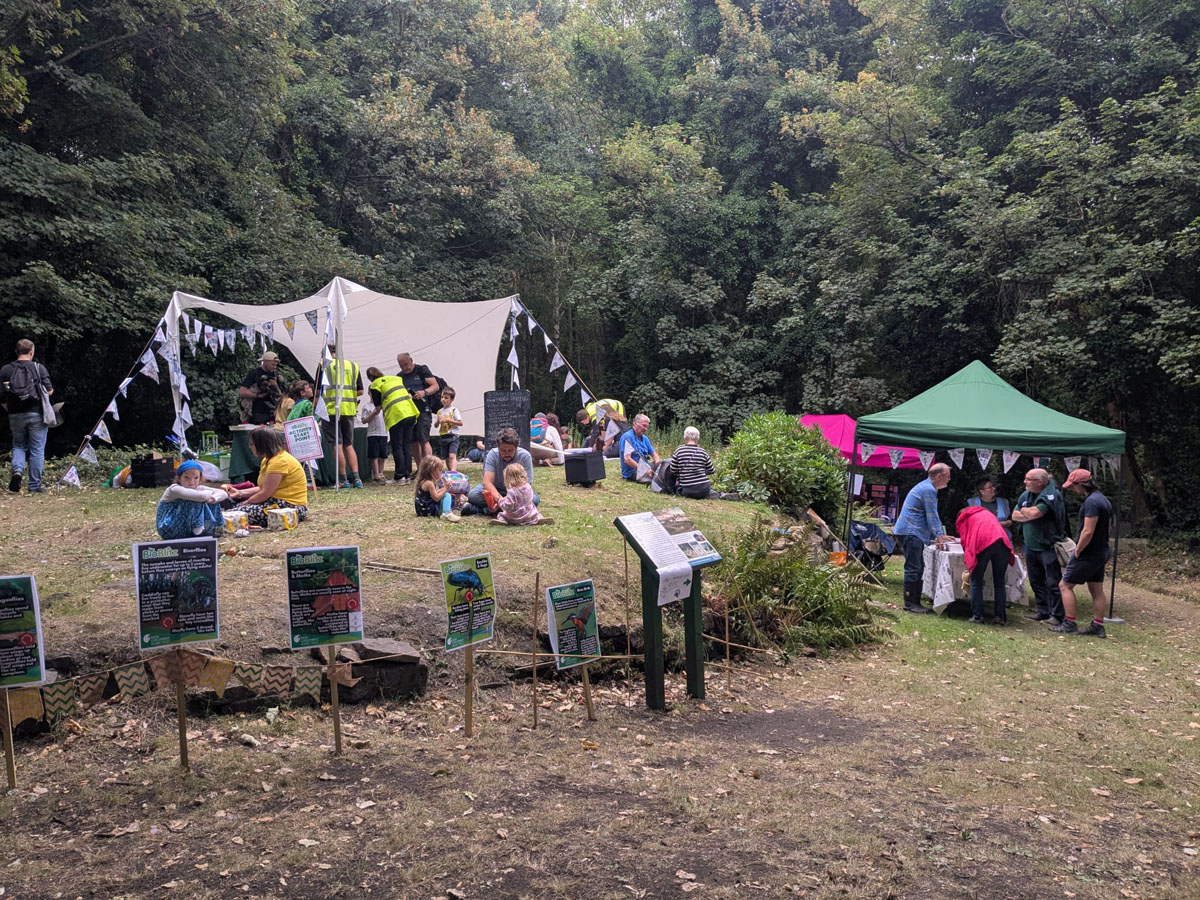
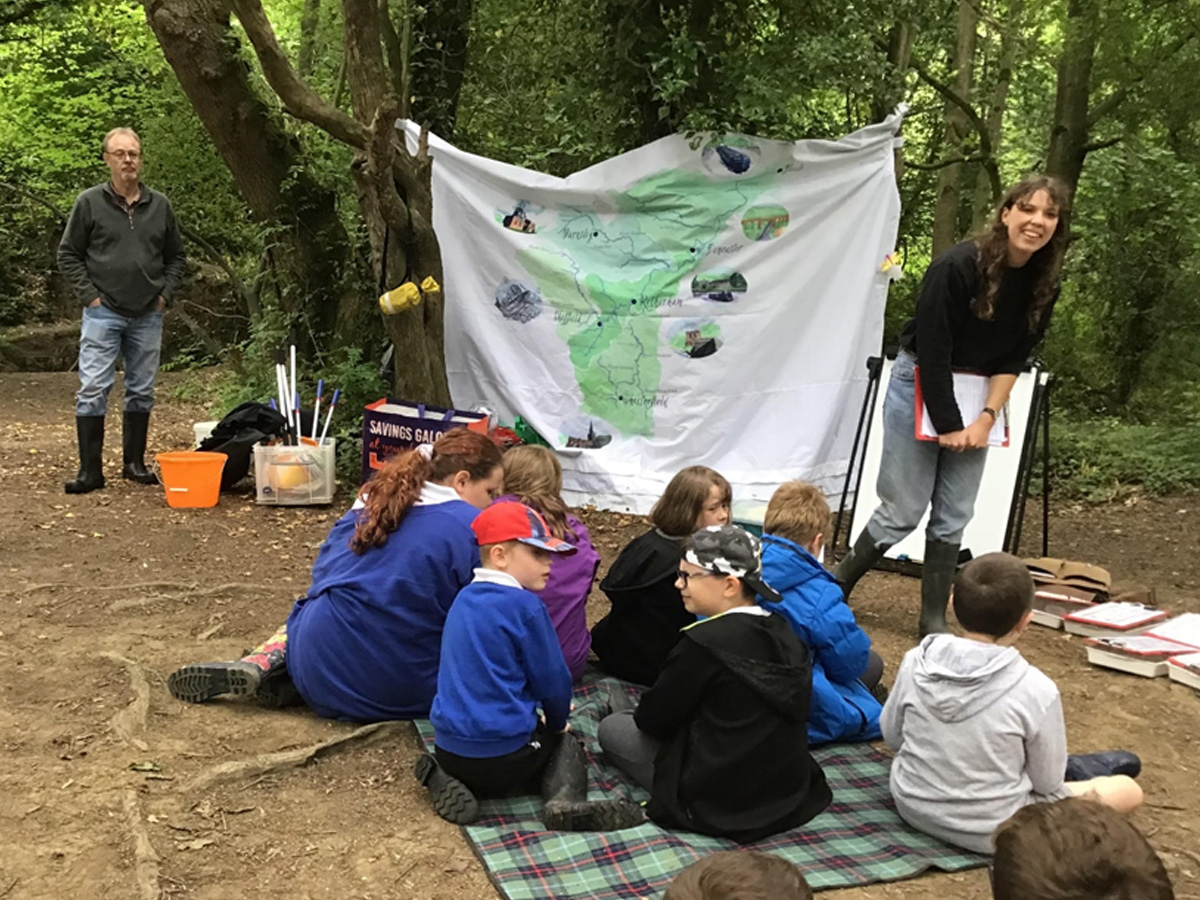
Photo from an outdoors River Guardians session with Sally and the students.
When talking to the Don Catchment Rivers Trust’s (DCRT) engagement officer, Sally Hyslop,
about the River Guardians program, she says, ‘It’s DCRT’s educational program, we offer
sessions to local primary schools but also to uniformed groups such as scouts and beavers.’
‘We do indoor sessions where we can bring river samples into the classroom and outdoor
sessions ranging from bat walks to bug hunting with links to the curriculum and to badge-work
for scouts.’
Sally mentions how the River Guardians program has been well-received for several reasons, ‘Schools really enjoy our sessions, because we try and encourage them to come outdoors and we focus on
local river sites nearby. I think it’s proved really important for a lot of children who haven’t been
to these sites, which they can then take their parents to and explore further.’
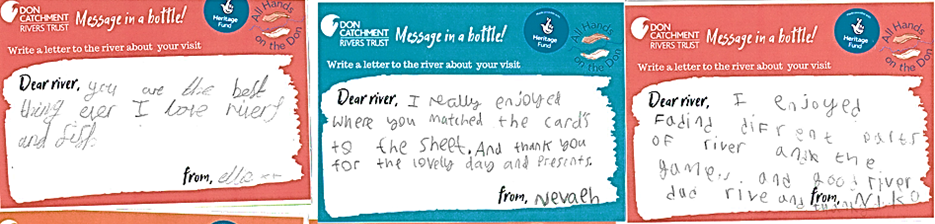
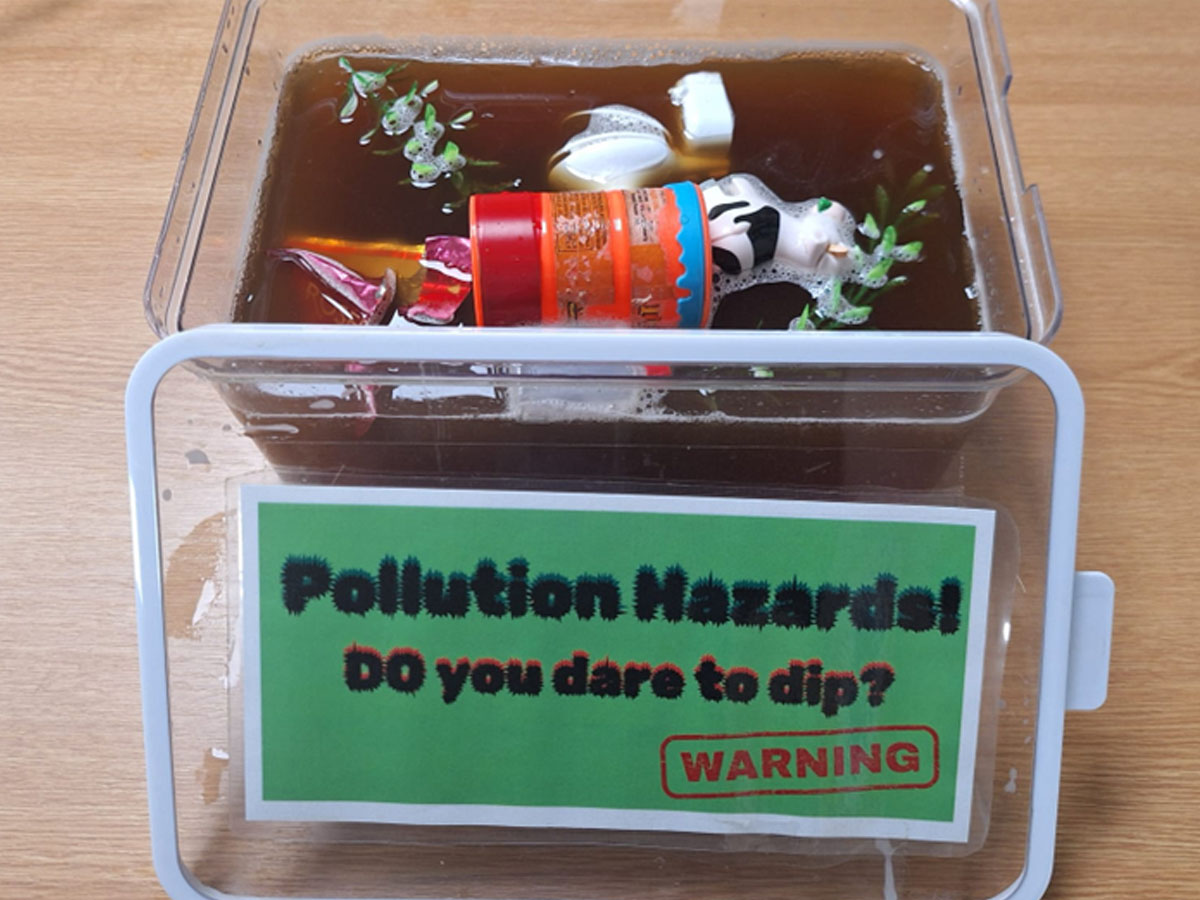
Photo of students’ ‘message in a bottle’, feedback from after a River Guardians session.
In recent years, outdoor teaching has become more popular. The engagement officer
talks about her experience with it, saying, ‘There’s loads of benefits to learning outdoors
basically. We’ve found our sessions are really useful for young people to understand
complicated classroom concepts in a real-world setting. Things like river geography can be
really complicated when you’re learning them in class but suddenly when you see the river it all
sort of clicks into place.’
‘Because you’re learning in a more sensory environment it’s way more stimulating, so there’s
been studies showing that people learning in these environments have a) better wellbeing, and
b) reduced behavioural problems in class. So, some students that may struggle in a classroom
setting will often do really well in an outdoor setting [1].’
‘But the coolest thing about outdoor learning is that studies have shown that there’s improved
brain function and improved memory. So basically, humans retain information and learn better
outside so it can be really beneficial to people, and it can help with expression of ideas and all
sorts of things like that [2].’
460 children were taught in a River Guardians session in 2023. Currently, DCRT have Heritage
Lottery funding to deliver River Guardian sessions for free to primary schools near the River Don
in Doncaster, through their All Hands on the Don project.
[1] Natural Connections Demonstration Project, 2012- 2016: Final Report www.gov.uk/natural
england. (2016). Available at:
https://publications.naturalengland.org.uk/file/5883452499427328.
[2] Vella-Brodrick, D.A. and Gilowska, K. (2022). Effects of Nature (Greenspace) on Cognitive
Functioning in School Children and Adolescents: a Systematic Review. Educational Psychology
Review, 34(3). doi:https://doi.org/10.1007/s10648-022-09658-5.
There is an online events calendar at https://dcrt.org.uk/events-calendar/ for future happenings with DCRT in Doncaster. If you’re interested in conservation volunteering and heritage events in Doncaster, please check out DCRT’s website or social media.