In this guest blog, we hear from DCRT volunteer Antony Meadows who has learnt how to manage vegetation using a traditional tool – the scythe!
Back in the summer DCRT passed on details of a course to be held in the Moss Valley on how to use a scythe. For those who don’t know a scythe is a long-handled bladed tool traditionally used to cut hay and cereal crops. It’s been in use for centuries and of course, is now superseded by modern machinery, but is enjoying a comeback in certain conditions where machines can’t be used. It’s environmentally friendly, non-polluting and good exercise!
The course sounded interesting so I decided to give it a go. We were using modern Austrian scythes. These are slightly different to the traditional English-type scythes that had been made in Sheffield for hundreds of years. Nowadays Austria and Italy are the only places in Europe where scythes are made. They are lighter and easier to use than the older versions.
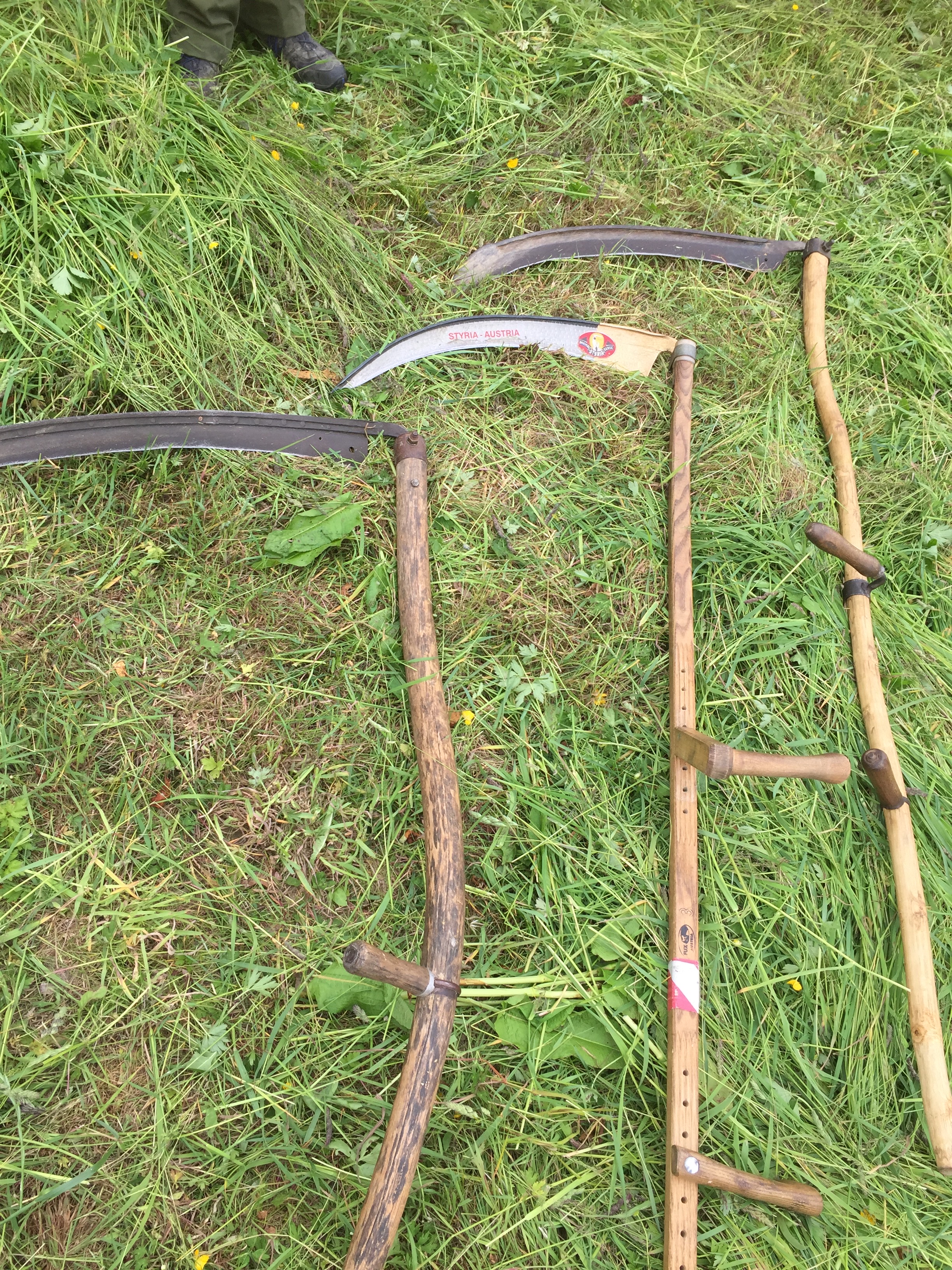
First of all, we had to attach the scythe blade to the handle (called a snath) and adjust it to ensure it was comfortable to use. We then had to sharpen the blade. Scythes are really efficient at cutting crops but must be kept sharp. This needs to be done every 5 minutes or so! You wouldn’t think the blade would lose its edge so quickly in use, but you can tell when it’s getting harder to cut with and needs sharpening.
To sharpen the blade you use a sharpening stone which you carry on your belt in a holder half filled with water. You kneel on the floor with the snath on your left and the blade pointing down in front of you. You then pass the stone in downward strokes along the front edge of the blade. You do the same at the back of the blade to remove residue called burr. The edge should be sharp now so you can start to use the scythe!
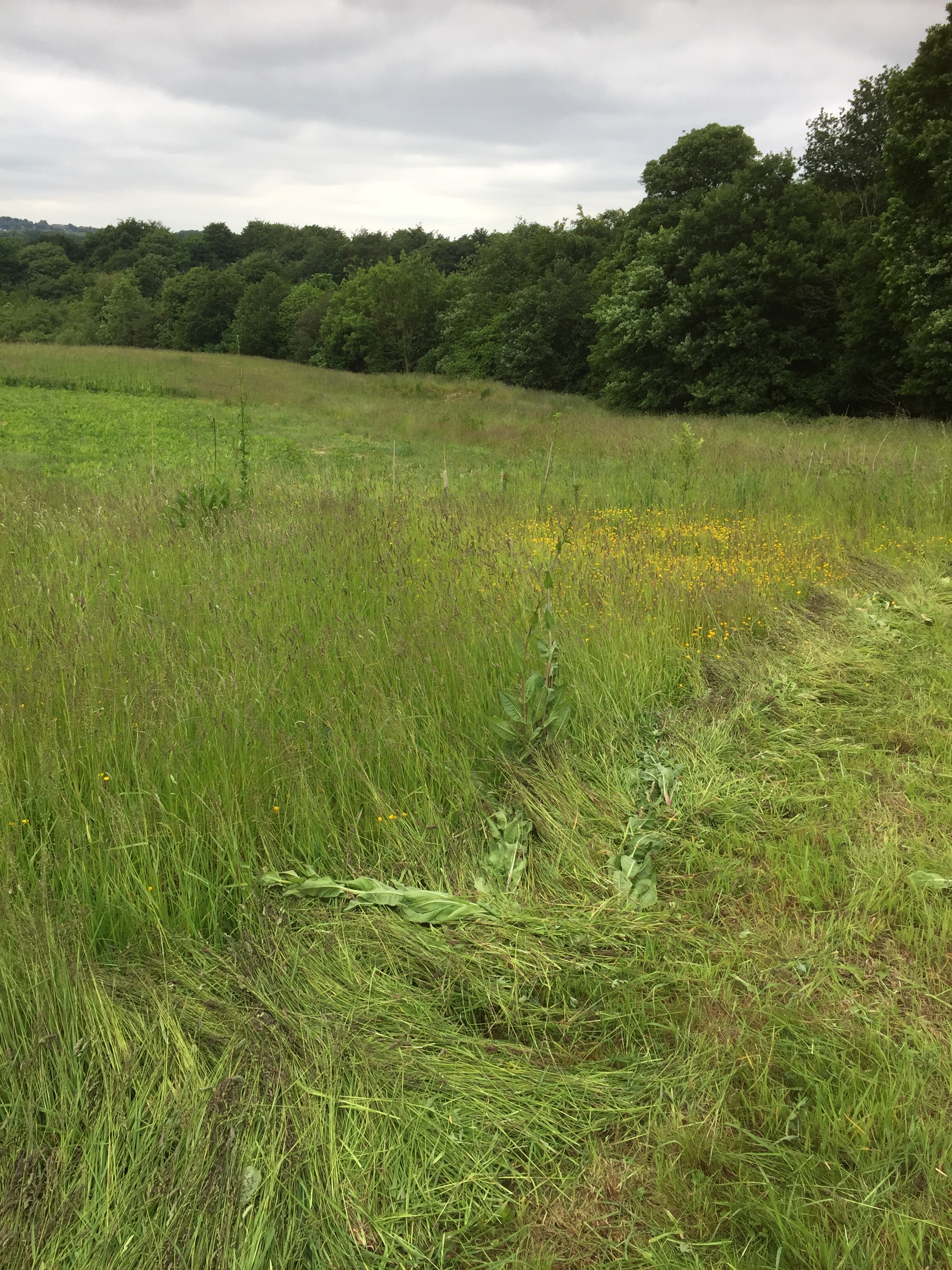
You stand with your feet apart, with the scythe in front of you with the back of the blade on the ground. You then move the blade in a semi-circle in front of you until the blade reaches about 10 o’clock. Move the blade back in the same arc, step forward slightly and repeat. It’s a really satisfying feeling to see the grass being cut in front of you. The grass is carried by the blade to the left of you leaving a neat row. All you can hear is the swish of the blade and the grass being cut: just as our ancestors did for centuries. Then it needs sharpening again!
It’s remarkably easy to use a scythe and not tiring at all. Our ancestors weren’t fools, they made it as easy for themselves as they could. They might start to harvest a field at say 06.00am, but would have finished by 10.00am, using the rest of the day to turn the rows of hay to dry in the sun. If it was rainy they’d have to create mounds of hay called haycocks for the rain to run off.
We were also taught a technique called “peening” where you have to reshape the edge of the blade so that it can hold a sharp cutting edge.
All in all, it was a very enjoyable day. I learnt a lot and it was very rewarding to see how much grass we cut and to know you’d done it using tools that have been around for centuries.