
In this blog we hear from Volunteer Coordinator, Anthony Cox, on a river improvement project in Doncaster
Recently we have completed a project, funded by the Green Recovery Challenge Fund, which helped to fund the new NFM scheme at Grassmoor Country Park, in Chesterfield. Some of the funding also helped us to do some improvement work on the Bentley Mill Dike in Doncaster. In this blog I will explain what DCRT have done to help improve this often-forgotten stretch of river for both people and wildlife!
The Bentley Mill Dike has a few names as it runs from the grounds of Brodsworth Hall until it reaches the River Don. It starts as the Cliff Spring Drain, then becomes Langthwaite Dike, as it enters Bentley it becomes the Bentley Mill Dike and after it leaves Bentley it becomes the Fowler Bridge Drain however for the simplicity, we have called the whole river the Bentley Mill Dike.
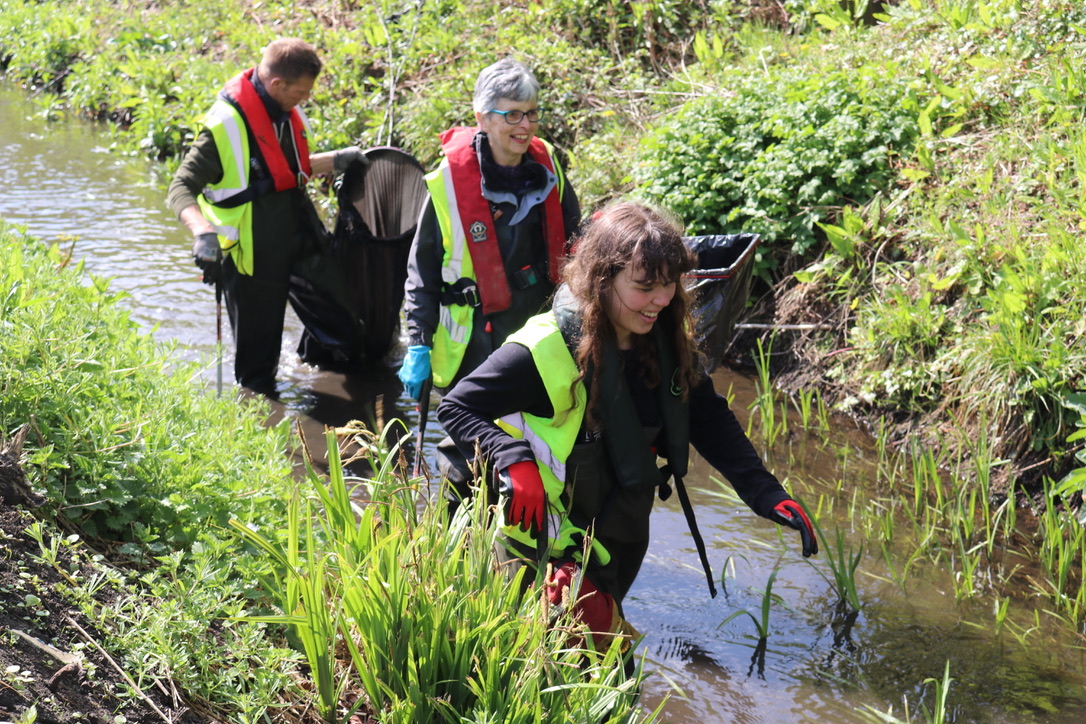
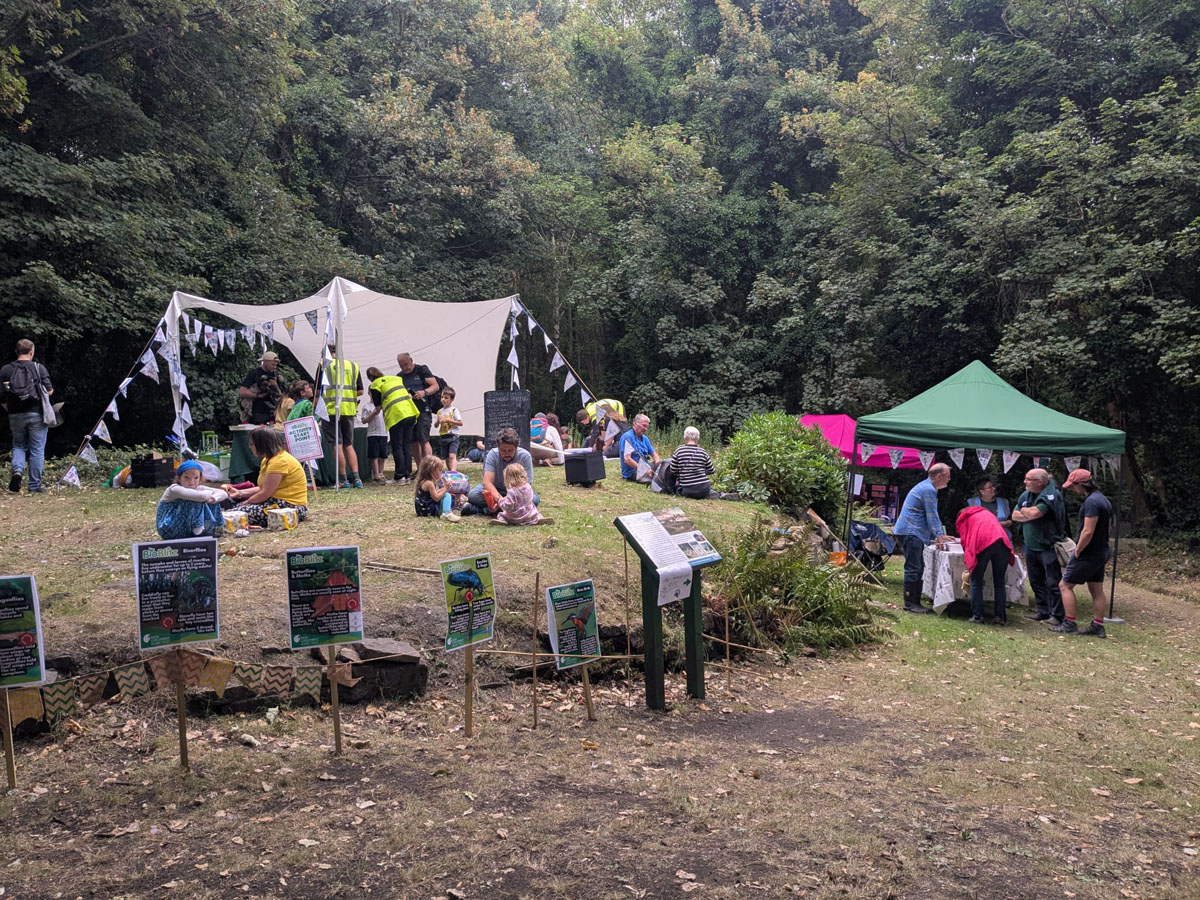
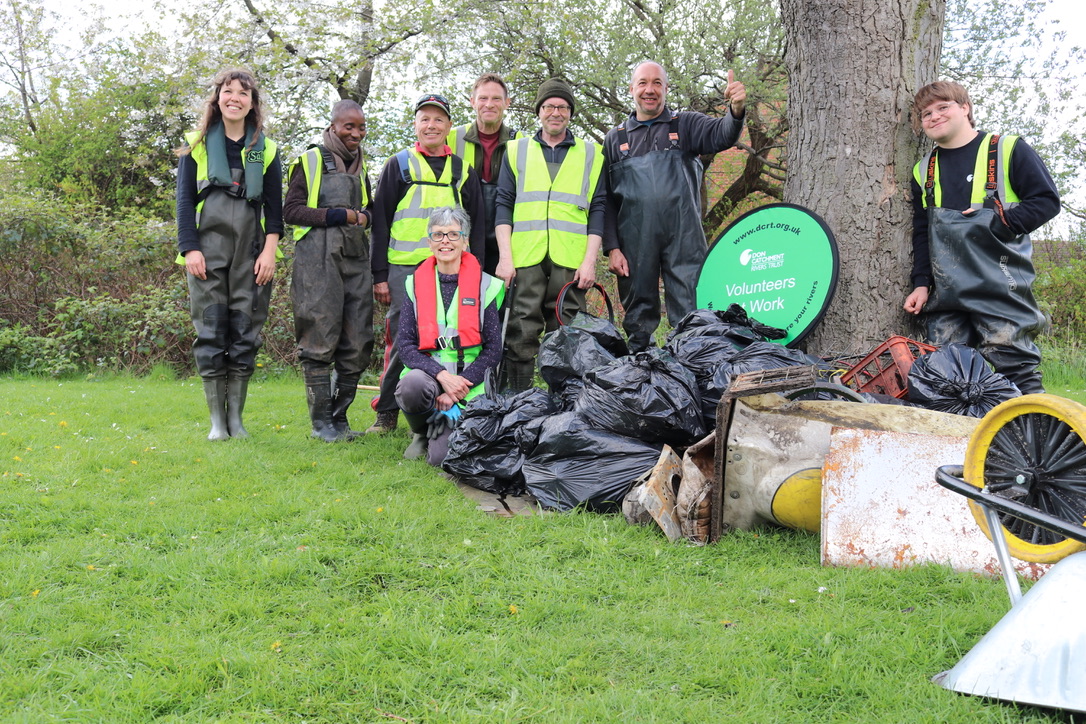
We first started work on the Bentley Mill back in April 2022, and from then onwards we ran regular clean up days in Bentley and around Highfields Lake to reduce the amount or litter in the area. On these days we worked with local volunteers to help improve the riverside green spaces, building community respect for the river and hopefully reducing the amount of rubbish littered here in the future. Over the last year we have seen a significant improvement in how clean the river is and we have successfully improved 3km of river, over several volunteer days. Thanks to the Litter Free Team (@LitterFreeTean on Twitter) for their help in the Bentley area.
Next, we started to plan habitat improvements along the stream. Our first plan was to help to provide more light to the river along a section just upstream of Highfields Lake which is overshadowed by a thick canopy of trees. The idea was to remove some of the overhanging branches from above the river which would allow more sunlight to reach it. Sunlight is crucial for plant life, which we are hoping to encourage in the Bentley Mill Dike. But how would this effect the rest of the wildlife in and around the river? If there is an increase in microalgae and aquatic plants, then there is a higher food source for freshwater invertebrates, such as Mayflies and Caddisflies. If these insects are more abundant, there is increased food for fish in the river, whose populations will benefit. Increases in macro-vegetation can also provide habitat for fish to rest and hide from predators, such as Grey Herons or Little Egrets.
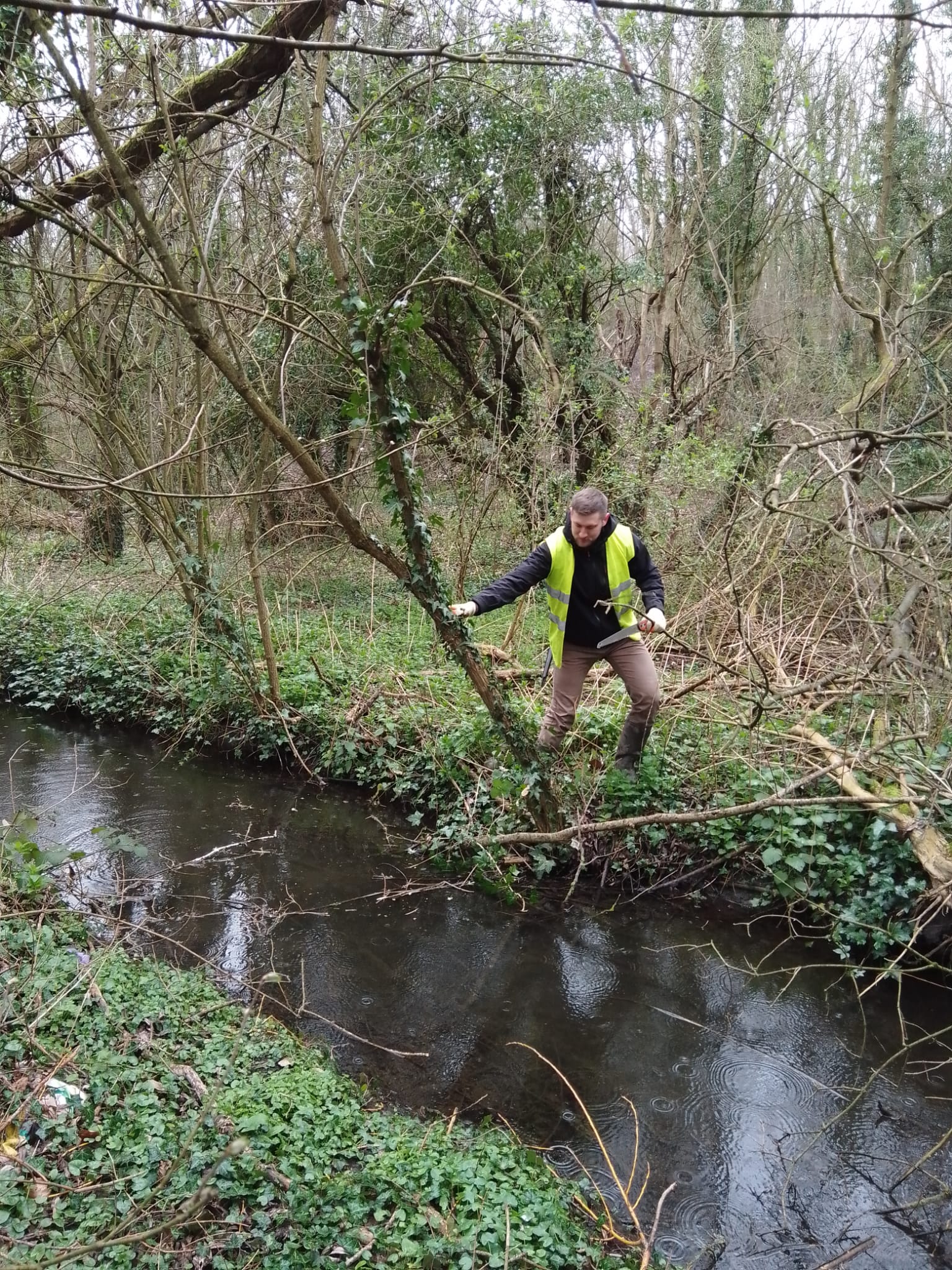
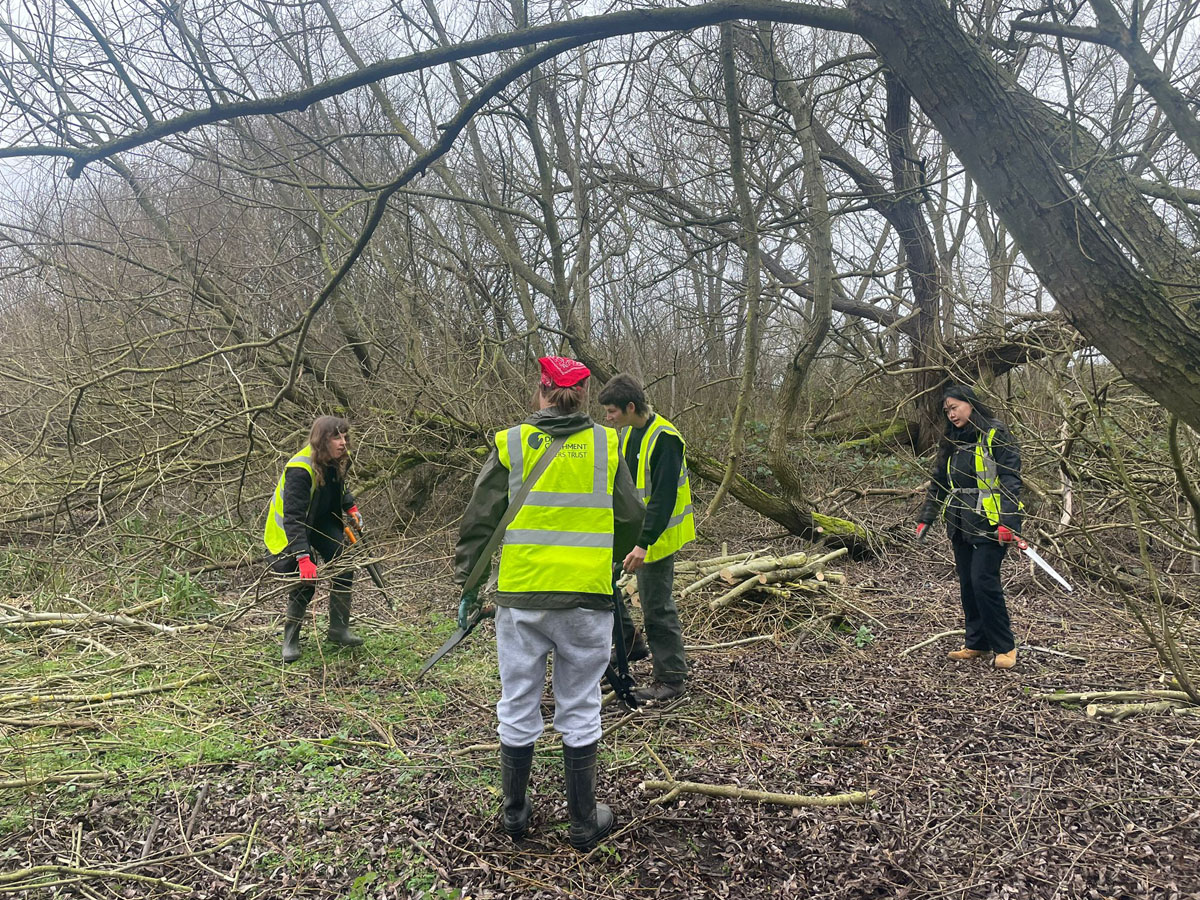
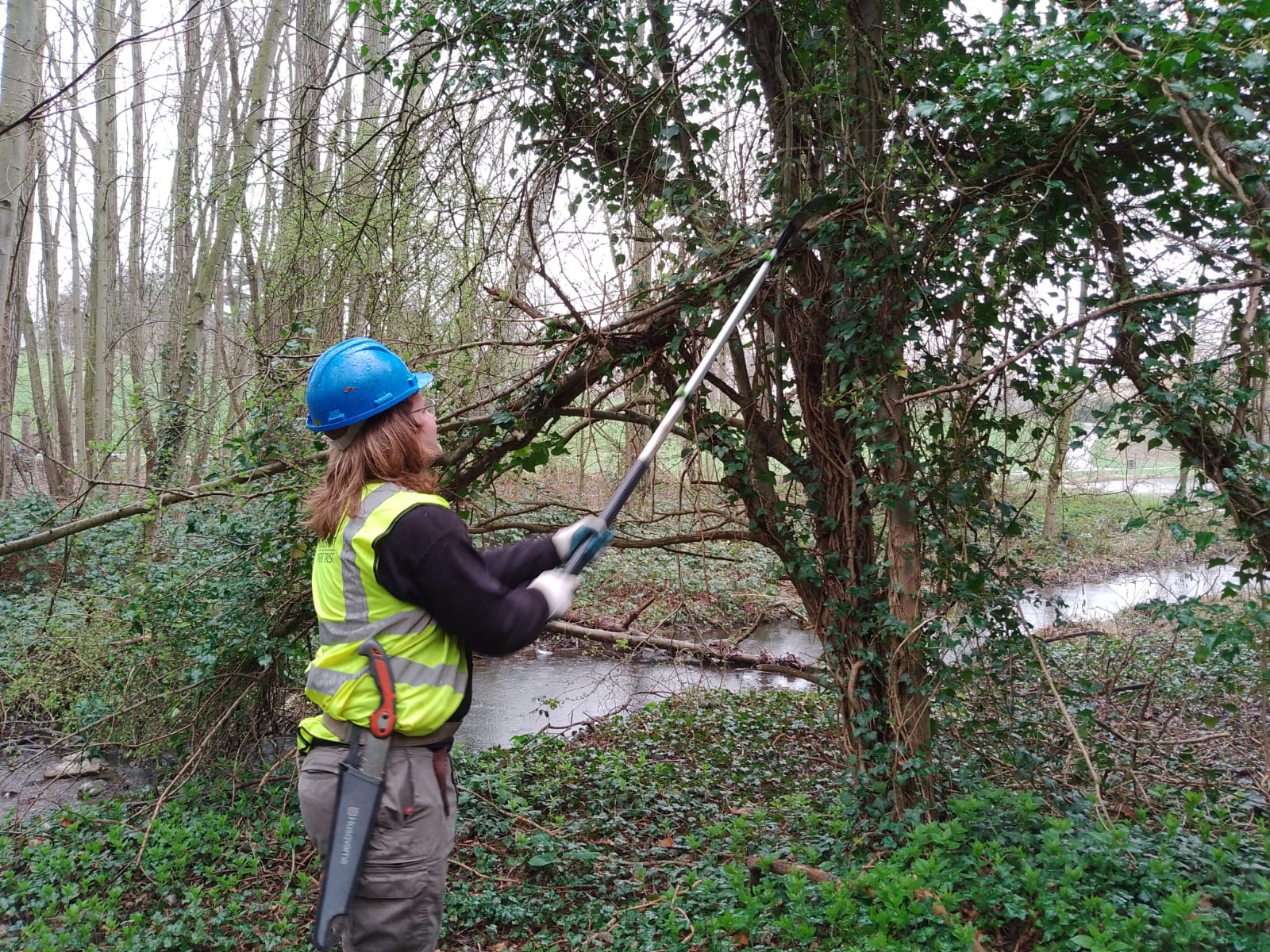
We ran a day with volunteers where we used a pole saw to remove branches that were overhanging the river channel and removed some of the small trees next to the channel to allow light in. We left some areas to provide shade for fish in the river. It is beneficial to have a balanced habitat of both shade and sunlight so that the river can have a balanced ecosystem of plants and cooler spots which will allow wildlife to thrive. As the bird nesting season had begun, we made sure to check every branch visually before we took it down. Some people may not even have noticed that the river was there before! This was done along the footpath from Highfields to Bentley just downstream of the lake.
Finally, we decided to create some viewpoints along the riverside foot path, so passers-by can see the river through thick vegetation and appreciate its beauty and the fascinating wildlife that lives in and around it. Some people may not even have noticed that the river was there before! This was done along the footpath from Highfields to Bentley just downstream of the lake.
The Bentley Mill Dike is a highly modified river which suffers from having both intensive agriculture and highly urbanised areas along it. However even small scale clean-ups and habitat management work can have a hugely positive effect on wildlife and people. This is especially important in the urban areas of the catchment where green spaces are sparse. During the project on the Bentley Mill Dike, we saw a majestic Little Egret in the centre of Bentley in a tree. This may be a stopping off point as it moves around the landscape, however even this urban river is an important environment for these birds and should be respected and looked after. What we should take away is that every river however polluted, however littered or however forgotten, it is important and should not be overlooked!
By Project Volunteer Coordinator Anthony Cox