Here’s Matt Duffy’s (our Catchment Officer’s) guide to how to start bird watching whilst you may find yourself around the home more than you usually would.
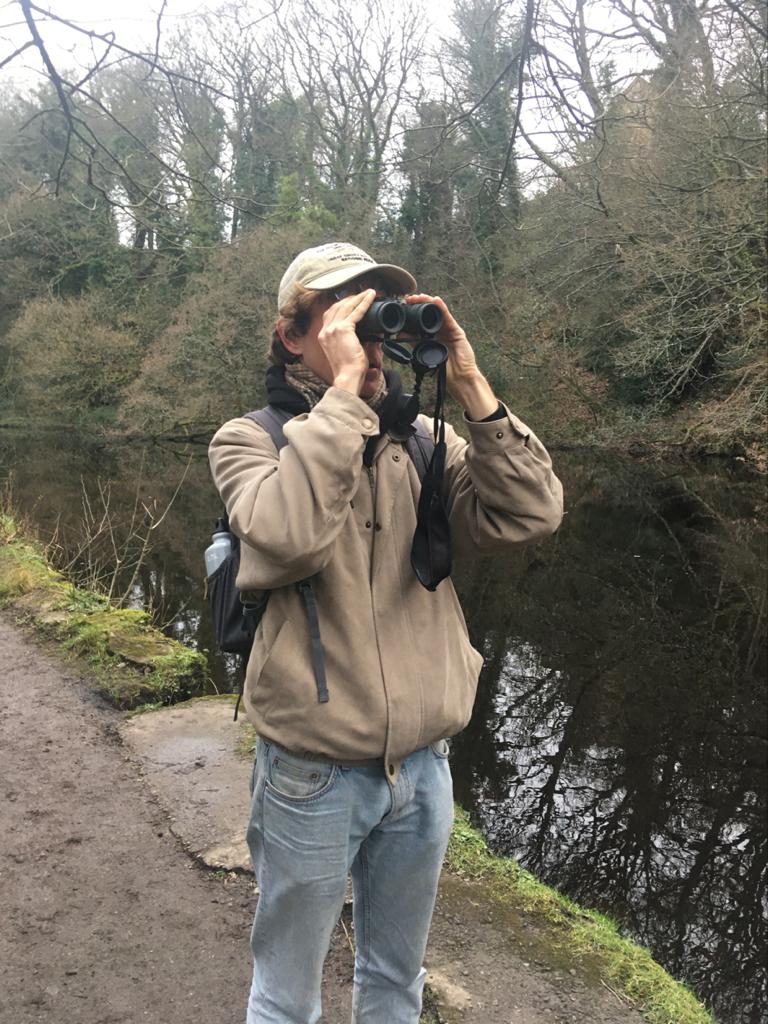
Matt out bird watching along the Rivelin Valley, Sheffield
I started bird watching about 10 years ago when I was at university. I didn’t really have an interest in birds at all before this time but then I just started to take notice of those I was seeing as I walked through the park to university and wanted to know more about them. I wouldn’t describe myself as an expert and I’m still learning but here’s my guide to how to start or develop your bird watching skills.
Before we go out bird watching there’s a few things to consider before you do so…
Laws and etiquette
Do your best not to disturb a bird whilst you’re birdwatching. They may appear agitated by your presence particularly if you’re near their nest (nesting season is March – end of July). They’ll often make short, sharp ‘alarm’ calls and make small jumping movements as well as flitting their wing – if they do, move away and this will hopefully allow them to relax them and continue with their natural behaviour.
Also, whilst it is amazing to see a nest, damaging or disturbing one whilst it is in use or being built is against the law as is taking any eggs. If you’re interested in looking at nests you may find an old one in a hedge or tree outside of nesting season which you can have a look at.
Equipment
You don’t need anything to start bird watching, just your eyes and ears and attention – I only bought my first pair of binoculars a few years ago. If you would like to make it an easier and more enjoyable experience, the RSPB have a guide how to choose binoculars here – https://www.rspb.org.uk/birds-and-wildlife/wildlife-guides/birdwatching/choosing-bird-watching-equipment/how-to-choose-binoculars/
Learning to identifying birds by sight
My first tip would be to go outside and see what you find – be it during a walk, sitting in your garden or even just opening up the window. Try to identify what you’re seeing and keep practicing. If you haven’t got any birds in your garden, think about attracting them by using feeders or by making your garden wildlife-friendly (https://www.rspb.org.uk/birds-and-wildlife/advice/gardening-for-wildlife/)
Bird books
When I first started taking notice – apart from their more obvious size and colour differences – all birds looked the same to me and I found it difficult to distinguish between them. I remember noticing a bird in the park for the first time and wondering what it was. I kept it in my mind’s eye until I got home and looked it up in a bird book. To my despair I found that there were several birds that looked very similar such as a Song
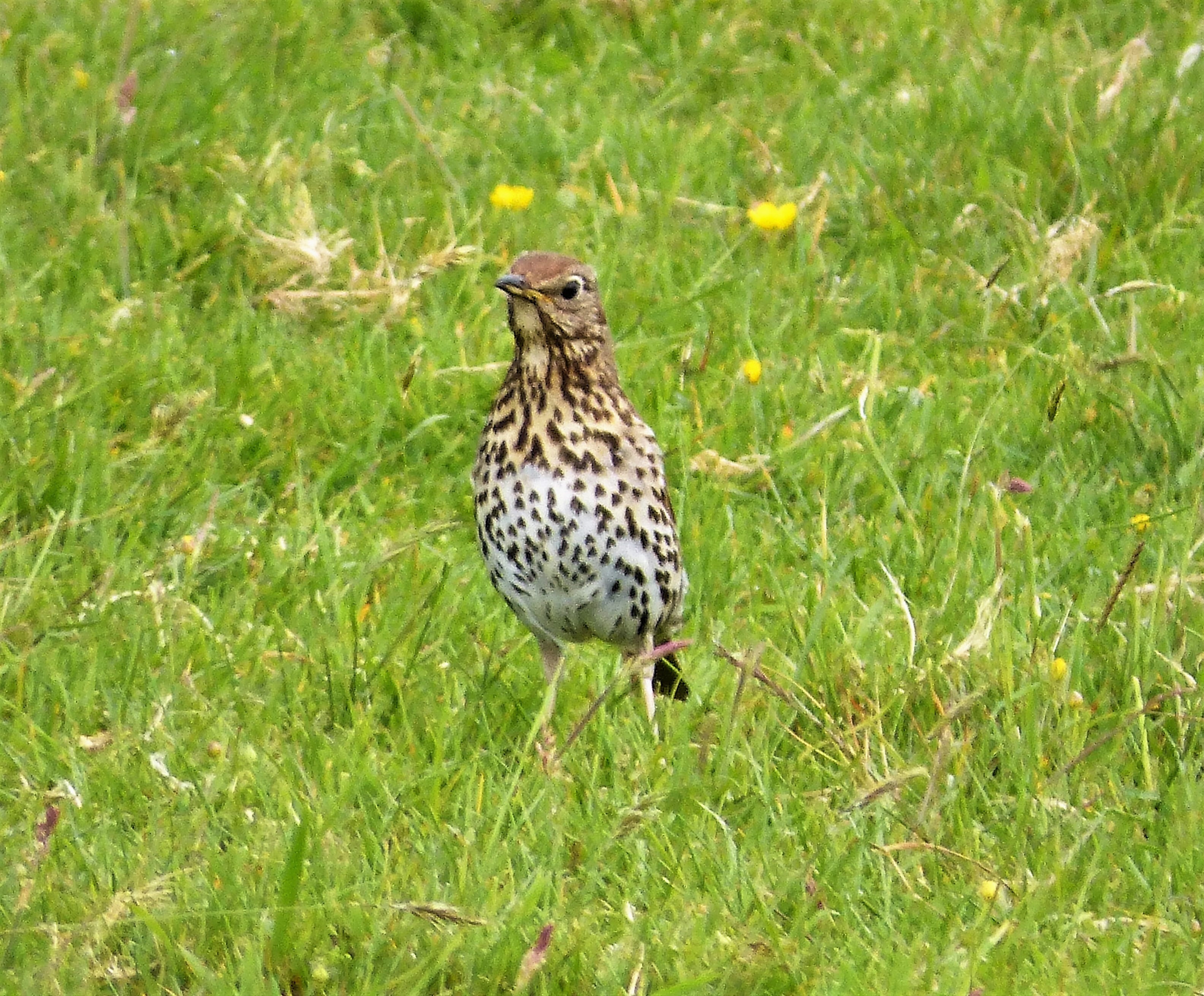
Mistle Thrush Copyright: gailhampshire
Thrush, Fieldfare and Redwing! The books guided me through the specific plumage or markings, a range of habitats you might find a particular bird, the time of year and its characteristics which helped me narrow it down to that it was most likely a Mistle Thrush.
Any bird book will give you an overview birds but I can recommend this book for helping you step-by-step to identify what you’re looking at – https://www.bto.org/our-science/publications/bto-books-and-guides/collins-bto-guide-british-birds
The internet
Now that you can carry the internet where ever you go it’s easier than ever to identify bird whilst out and about. Most people have high quality camera phones too, try to get a good photo of the bird you were looking at you can stick it on one of the many wildlife identification websites available (I use- ispotnature.org/) where there will be lots of knowledgeable people willing to help you identify what you were looking at. Facebook groups can be very helpful too, here’s one I’m – www.facebook.com/groups/yorkshirebirders
The RSPB has a great interactive bird identifier that you can click through to help identify what you’ve seen which is handy if you don’t have a book- https://www.rspb.org.uk/birds-and-wildlife/wildlife-guides/identify-a-bird/
The British Trust for Ornithology (BTO) has lots of great videos on their YouTube channel (www.youtube.com/user/BTOvideo) for helping you identify different birds within a
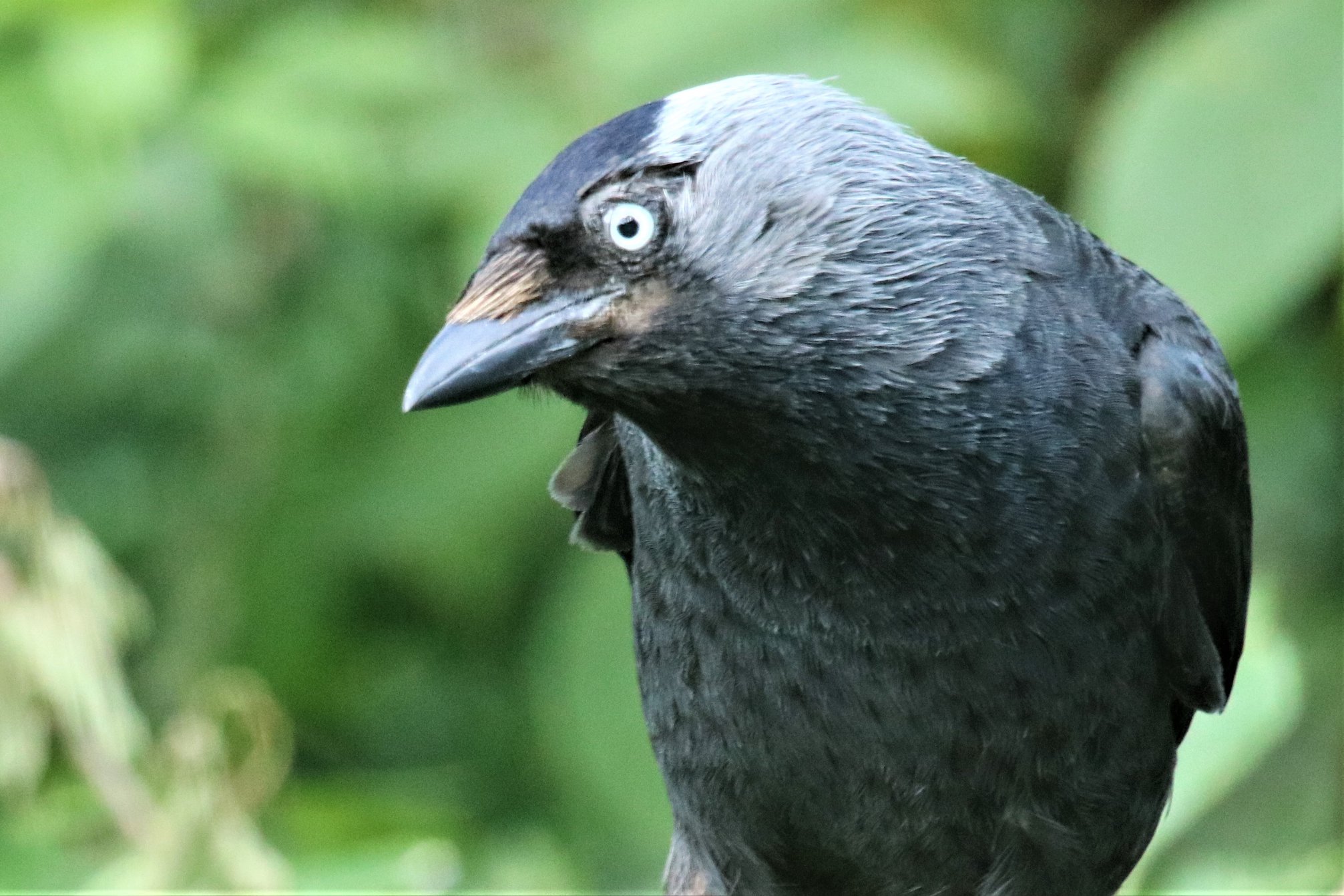
A Jackdaw – a part of the corvid family. Photo Credit: Edward Koczy
family. For example here’s one about the Corvid (Crow) family – www.youtube.com/watch?v=qi1p0yh4X3I
Other people
Is there a secret birder in your house? Is there someone that would like to learn with you? It’s great if you’ve got someone to ask or if someone else in interested in learning along with you, it can be a really bonding experience.
Learning to identify birds by sound
Like us, birds make a whole range of sounds depending what they are trying to convey. This could be a contact call which is basically the bird saying ‘hello’, an alarm call if something is disturbing it such as a person or predator, or it could be its song, used to attract a mate as well as defend a territory. Technically, songbirds are those that are part of the thrush, warbler and finch families. Their song is something they practice and get better at over time. Whereas a call is something they are innately hard-wired with from birth and doesn’t change over time.
Watch the video here
Learning bird sounds is something I found very difficult to begin with. I was amazed that you could even identify a bird merely by its song! I’ve very slowly learned a few bird songs but as with most wildlife identification I’m still learning and finding out what I thought was one bird turns out to be another similar sounding one.
If you’re interested in learning how to identify a bird by sound, you can start with the birds you see in your garden or whilst you’re out walking. If you hear a call, stop and try and spot where it’s coming from. Watch and listen for a while and let the sound sink in while you hold the picture of the bird in your mind.
I’ve found that if I listened to them online, think about how they sounded and then got someone to test me, I slowly learned how each song should sound. There is often tell-tale or key-identifying features within the song that makes it characteristic to that bird and learning those can make it much easier to begin with.
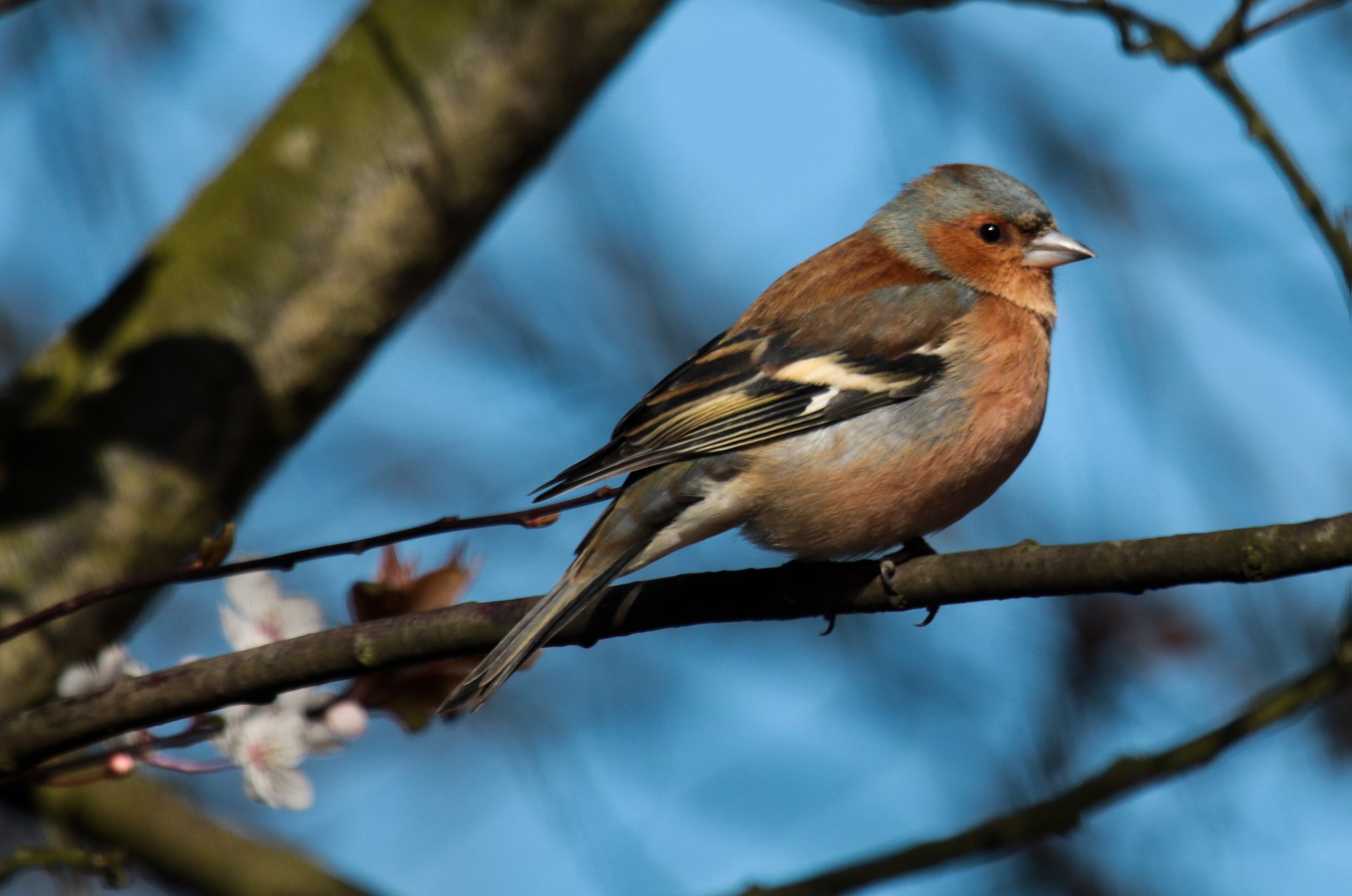
A chaffinch. Photo Credit: Edward Koczy
For example, click this link to listen to a clip of the chaffinch’s song. A chaffinch is said to have an ‘a-tishoo!’ sound at the end of its call as if it’s sneezing. Can you hear it?
Take a walk with me, listening to the bird via this video I created
[youtube https://www.youtube.com/watch?v=Zx4fyNPvCEc&w=560&h=315]
Here’s some links bird sound clips:
https://www.woodlandtrust.org.uk/blog/2019/04/identify-bird-song/
https://www.british-birdsongs.uk/alphabetical/
https://www.xeno-canto.org/ – A comprehensive list of bird sounds from around the world
Just keep practicing and you’ll get there!
Happy birding!
Here’s a two little quizzes of common birds you might see in and around towns and cities to see which birds you know already